Understanding the Contrast: Burkina Faso Versus Lesotho Two Flags
Flags are far more than pieces of fabric. They are distilled symbols of national identity, history, and aspiration. For professionals working in design, branding, marketing, and even diplomacy, analyzing flags offers a unique lens into how visual elements communicate complex narratives. The comparison often drawn as Burkina Faso versus Lesotho two flags is not simply an exercise in vexillology — it is a practical case study in how different design philosophies, cultural contexts, and symbolic priorities create distinct visual identities. Understanding this contrast can sharpen your own approach to visual storytelling, whether you are developing a brand identity, crafting a campaign, or leading a cross-cultural creative team.
The Two Flags as Visual Stories
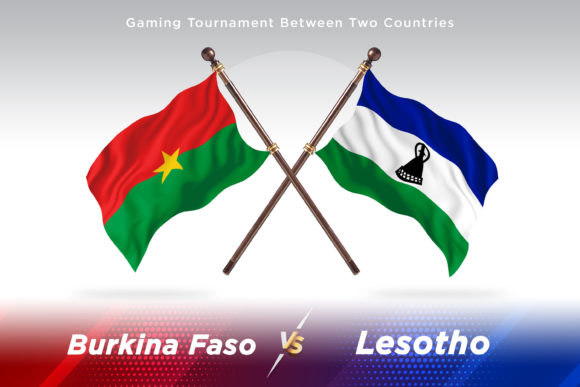
At first glance, the flag of Burkina Faso and the flag of Lesotho appear to belong to different stylistic families. Burkina Faso’s flag, adopted in 1984 after the revolutionary government came to power, features two horizontal stripes of red and green with a yellow five-pointed star centered in the middle. The design is straightforward, geometric, and highly legible. In contrast, Lesotho’s flag, last updated in 2006, consists of three horizontal bands of blue, white, and green, with a black Basotho hat — the mokorotlo — prominently placed in the center. The hat is a detailed silhouette, offering cultural specificity that goes beyond simple color blocks.
This difference in complexity is exactly why Burkina Faso versus Lesotho two flags provides such a rich comparative tool. The former relies on universal principles of color and shape; the latter incorporates a culturally unique icon. Both achieve their purpose—to represent a nation—but they do so by appealing to different aspects of human perception and memory.
Design Principles and Symbolism
Let us examine the symbolic language of each flag. In Burkina Faso, the red stripe symbolizes the socialist revolution and the blood of martyrs, while the green represents the country’s rich agricultural resources and hope for the future. The yellow star is the guiding light of the revolution. The overall effect is one of clarity and unity—two strong colors and a single emblem. This design follows a tradition of post-colonial flag creation where simplicity was prioritized to foster national cohesion among diverse ethnic groups.
Lesotho’s flag, on the other hand, tells a more layered story. The blue stands for the sky and rain, vital for the country’s agriculture and water resources. White symbolizes peace, and green represents prosperity and the land. The black mokorotlo is a traditional Basotho hat made of straw, recognized worldwide as a symbol of Lesotho’s cultural identity and the Basotho nation’s resilience. By including this specific emblem, the flag communicates pride in heritage and a deep connection to local tradition.
For professionals, the Burkina Faso versus Lesotho two flags comparison highlights a fundamental decision in visual communication: Do you prioritize universal recognizability or cultural distinctiveness? Both are valid, and your choice depends on audience, context, and purpose.
Why People Are Paying Attention to This Comparison
In recent years, there has been a surge of interest in national flags among designers, marketers, and content creators. The reason is practical: flags are condensed brand systems. They combine color palette, shape, iconography, and hierarchy into a single, highly impactful visual. As global audiences become more visually literate, the subtle differences between flag designs become more meaningful. The discussion around Burkina Faso versus Lesotho two flags reflects a broader curiosity about how nations signal their values through design.
Additionally, the rise of digital media and global connectivity means that flags appear in contexts far beyond government buildings. They are used in social media avatars, merchandise, travel branding, and even corporate logos inspired by national aesthetics. Marketers targeting diverse audiences need to understand the connotations behind these symbols. The contrast between Burkina Faso’s revolutionary minimalism and Lesotho’s traditional iconography offers a concrete reference point for discussions about authenticity, modernity, and cultural respect.
Changing Needs and Expectations in Visual Communication
Audiences today demand authenticity and depth. A flat logo or a generic color scheme no longer resonates the way it once did. People want to know the story behind the visual. The Burkina Faso versus Lesotho two flags example demonstrates how two different approaches to storytelling can work effectively. Burkina Faso’s flag tells a story of renewal and collective direction through abstraction. Lesotho’s flag tells a story of place and cultural continuity through a recognizable local artifact.
For entrepreneurs and freelancers, this is a powerful lesson. If you are designing a brand for a new product or service, you can choose between a more abstract mark that conveys a universal emotion (like hope or progress) or a more literal icon that roots the brand in a specific heritage or location. Both paths have pros and cons, but the key is intentionality. The designers of both flags made deliberate choices to reflect the national character of their respective countries.
Practical Examples and Observations
Consider a hypothetical marketing campaign for a tourism board. If you were promoting Burkina Faso, you might draw on the flag’s red, green, and yellow to create a vibrant, energetic visual identity that emphasizes revolutionary spirit and agricultural richness. For Lesotho, you might highlight the blue, white, and green palette along with the mokorotlo to evoke landscapes, peace, and cultural heritage. The flags provide a ready-made color scheme and emblem that can be adapted into logos, brochures, and digital assets.
Another observation: the flag of Burkina Faso is among the most minimal in Africa, while Lesotho’s is one of the few to include a highly detailed emblem. For a graphic designer studying the evolution of logo design—from complex crests to simple marks—the Burkina Faso versus Lesotho two flags case study illustrates that simplicity and detail are not inherently better or worse; they simply communicate different values. Burkina Faso’s flag is easily reproduced in any medium, from cloth to a tiny social media icon. Lesotho’s flag requires a certain level of resolution to be clearly legible, but once seen, its distinctive hat is memorable.
Connecting to Larger Developments in Vexillology and Branding
The study of flags, vexillology, has seen renewed relevance as organizations seek to understand the psychology of symbols. The trend toward simpler, more inclusive flags—as seen in recent redesigns of U.S. state flags and municipal flags—parallels the approach of Burkina Faso. Meanwhile, the desire for distinctiveness and cultural authenticity, which Lesotho’s flag exemplifies, is also reflected in the craft beer industry, where regional symbols and heritage are used to differentiate products.
For marketers, the lesson is clear: flags are a microcosm of brand strategy. The Burkina Faso versus Lesotho two flags comparison shows that you can be both simple and meaningful, or specific and evocative. The best choice depends on your target audience’s existing knowledge and emotional connection to the symbols you use.
Practical Takeaways for Creators and Professionals
Whether you are a graphic designer, a content marketer, or a business leader, you can apply insights from this comparison to your own work. Here are a few actionable points:
- Evaluate your color choices. Burkina Faso uses two bold, contrasting colors with established meanings. Lesotho uses three softer colors that together evoke a landscape. Think about what your color palette says about your brand’s personality and context.
- Decide on level of detail. A simple icon (like a star) can be universally understood but may lack uniqueness. A detailed icon (like the Basotho hat) is memorable but may not scale well. Test your logo at tiny sizes to see if it remains recognizable.
- Embed cultural meaning. Lesotho’s flag succeeds because the hat is not a generic symbol—it is specific to Basotho culture. If you choose a cultural reference, ensure it is accurate and respectfully used. Consumers increasingly call out appropriation or inauthenticity.
- Balance universality and distinctiveness. Burkina Faso’s star is a common symbol of guidance, but the red-green combination is distinctive. Lesotho’s hat is very distinct but the blue-white-green striped layout is similar to other flags. Both have made trade-offs.
These considerations are not just theoretical. In my work with entrepreneurs developing new brands, I often show the Burkina Faso versus Lesotho two flags as a starting point for discussion. Clients quickly grasp that there is no single right answer—only the answer that best fits their mission and audience.
The Broader Context: Flags as Tools for National and Brand Identity
Nations use flags to project an image to the world, just as companies use logos. The changing needs of modern audiences—who crave authenticity, simplicity, and meaning—are driving both national and corporate identity designers toward more considered approaches. Burkina Faso’s flag, born from a revolutionary break with the past, embodies forward-looking unity. Lesotho’s flag, with its nod to tradition, embodies resilience and cultural continuity. Both are valid responses to the challenge of representing a complex entity with a single visual.
For professionals, understanding this dynamic helps you anticipate how your own symbols might be perceived. When you design a logo for a startup, consider whether you want to signal disruption or stability. When you create a campaign that uses national colors, know what those colors mean in the local context. The Burkina Faso versus Lesotho two flags provides a clear, memorable example that you can use to explain these trade-offs to clients or team members.
Conclusion
The flags of Burkina Faso and Lesotho are more than national symbols—they are design case studies that reveal fundamental choices in visual communication. By comparing them, we see that effective design is not about following a single trend but about aligning form, meaning, and context. For designers, marketers, and entrepreneurs, the lessons from Burkina Faso versus Lesotho two flags are directly applicable to branding, messaging, and visual strategy. Whether you lean toward minimal abstraction or cultural specificity, the key is intentionality and understanding of your audience. Take time to study not just what you create, but why—and let the flags remind you that every symbol carries a story.