Burkina Faso Versus Venezuela: Two Flags, One Design Analysis
When you hear “Burkina Faso Versus Venezuela Two Flags,” you might picture a simple comparison of national banners. In practice, this comparison offers much more than a visual check—it’s a focused exercise in design analysis, color theory, and cultural interpretation. For graphic designers, educators, content creators, and marketers, understanding the differences and similarities between these two flags can inform real project workflows, whether you’re building a brand palette, teaching world geography, or developing cross-cultural visual content.
Understanding the Visual Elements of Each Flag
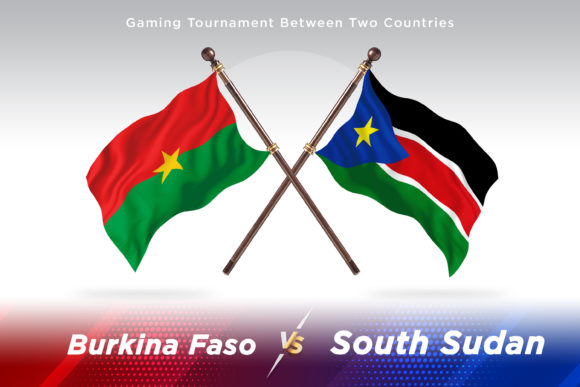
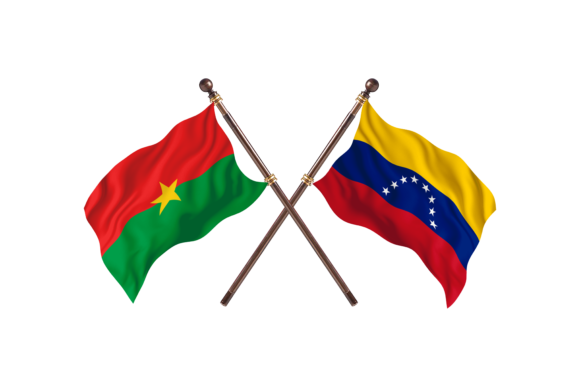
Burkina Faso’s flag consists of two horizontal bands: red at the top and green at the bottom, with a yellow five-pointed star centered. Venezuela’s flag features three equal horizontal stripes—yellow, blue, and red—with an arc of eight white stars in the center and a coat of arms in the upper left (on official versions). At first glance, both use primary colors, but the meanings and design rules differ sharply.
Burkina Faso’s red symbolizes the blood shed for independence (or the revolution), green stands for agriculture and hope, and the yellow star represents the guiding light of the revolution. Venezuela’s yellow represents the wealth of the land, blue the sea and sky separating Venezuela from Spain, red the blood of independence leaders, and the stars represent the original eight provinces. The coat of arms adds layers of national symbolism.
From a practical design standpoint, these flags present different challenges. Burkina Faso’s minimalistic layout is easy to reproduce in vector or print at any scale. Venezuela’s flag requires careful attention to small elements—stars and coat of arms—especially when resizing or working in low resolution. Knowing these details early in a workflow helps you choose appropriate file formats and export settings.
For Graphic Designers and Creators
If you’re designing a multinational company’s visual identity or a presentation that references both countries, comparing these flags is a legitimate research step. You’ll often need to match exact colors, reproduce symbols, or avoid unintentional associations. For example, the Burkina Faso flag uses a yellower star (hex #FCD116) against deep red (#CE1126) and green (#009460), while Venezuela uses bright yellow (#FCD116), royal blue (#003893), and red (#CE1126) for its stripes. Slight differences in shade can matter when your work appears next to an official flag.
For Educators and Trainers
Teaching comparative geography or political symbolism becomes more concrete when students analyze the flags side by side. You might create a digital worksheet or an interactive slide deck. The workflow involves gathering high-resolution images, annotating design principles (such as symmetry, color balance, and icon positioning), and then linking those observations to historical context. This process ties directly to learning objectives and assessment rubrics.
For Marketers and Brand Strategists
Understanding national flags supports inclusive marketing campaigns. If you run a campaign targeting audiences in West Africa or Latin America, flag imagery can appear in localized ads, packaging, or social media posts. Comparing Burkina Faso Versus Venezuela Two Flags helps you avoid mixing up color schemes or misplacing stars. It also gives you a benchmark for how bold versus detailed designs read at small sizes—critical for mobile-first content.
Practical Methods for Analyzing Flags Side by Side
To integrate this comparison into a real project, follow a straightforward process:
- Source official vector files from reputable repositories like Wikimedia Commons or government websites. Always check for “public domain” or “official use” licensing.
- Extract exact color values using an eyedropper tool (e.g., in Photoshop, Inkscape, or online tools). Record hex, RGB, and CMYK codes into a reference document.
- Create a side-by-side grid in your design software. Include a neutral gray background, scale both flags to the same width, and overlay measurement guides to compare star size, stripe proportion, and star count.
- Annotate differences in text layers or a separate notes file: Burkina Faso uses 2:3 ratio single star, Venezuela uses 2:3 ratio with 8 stars and coat of arms. Note that the coat of arms is omitted on some non-official versions.
- Export a comparison asset (PDF, PNG) for your project folder or team share. This becomes a reference for future work.
This method scales well. Whether you’re a solo freelancer or part of a larger marketing team, the same steps apply. The key is to capture the metadata (color codes, vector paths) early, so you avoid rework later.
Before a Project: Research Phase
In the research phase of any branding or educational project, include flag analysis as a cultural primer. Look up the flags of Burkina Faso and Venezuela not just as images, but as symbols of national identity. Understanding that a simple star carries revolutionary meaning vs. a series of stars representing historical provinces informs how you might use those elements in a derivative design. This step prevents accidental misrepresentation—for instance, using the Venezuelan coat of arms incorrectly in a context where it’s protected by law.
During a Project: Asset Creation
When designing a visual that includes either flag, refer to your comparison document for color accuracy. If you’re creating a split infographic comparing two countries’ statistics, place both flags side by side at exactly the same size to ensure visual balance. Use the alignment tools in your software to line up stripes or centers. For video work, allow enough on-screen time for the Venezuelan flag details to be perceived before zooming out.
After a Project: Quality Control
Before final delivery, perform a quality check using your comparison notes. Verify that colors are consistent across all outputs (web, print, video). Check that the stars on both flags are correctly oriented and spaced. In team environments, include the comparison as a reference file in your shared asset library. This builds institutional knowledge and saves time on future projects involving either flag.
Key Observations for Long-Term Use
- Color consistency: Both flags use primary red and yellow, but their blues and greens differ significantly. Venezuela’s blue is a medium royal shade (#003893), while Burkina Faso’s green is a vivid leaf tone (#009460). Always calibrate your monitor and use Pantone equivalents when printing.
- Scalability: Burkina Faso’s flag works well at tiny sizes (e.g., favicons, pins). Venezuela’s flag becomes illegible below certain resolutions because of the coat of arms. For small-scale applications, consider using a simplified version (stripes plus stars without coat of arms) if official guidelines allow.
- Cultural accuracy: Official Venezuelan flag regulations require the coat of arms on government and military use, but many sports teams and civilian contexts omit it. Know your audience and the legal context. Burkina Faso’s flag is uniform across all uses.
- Archival value: Save vector files (SVG, AI) and color swatches in your design system. If you work frequently with national symbols, creating a dedicated “flag library” with comparison files increases your efficiency over time.
Interaction with Other Tools and Resources
Flag comparison isn’t an isolated task. It interacts with several tools and knowledge bases:
- Color databases: Use Pantone Color Finder, ColorHexa, or Adobe Color to find closest matches. For web use, hex codes are sufficient; for print, ask your printer for PMS equivalents.
- Flag databases: Websites like Flags of the World (FOTW) or Wikipedia’s flag pages provide historical variations and usage notes. Cross-reference your own analysis with their data to avoid errors.
- Vector repositories: Wikimedia, Freepik, and Flaticon offer pre-made vectors. Verify the license—many are free for commercial use but may require attribution. For professional projects, tracing official government PDFs (if available) yields the highest accuracy.
- People and collaboration: If you work in a team with cultural consultants or historians, share your comparison draft and ask for feedback. They may spot nuances—like the exact tilt of the stars on the Venezuelan flag—that are easy to miss.
- Design software: Most vector applications (Adobe Illustrator, Inkscape, Figma, Affinity Designer) support the workflow described. Create a reusable template with two artboards and measurement guides for any two flags you need to compare in the future.
These interactions form a small ecosystem that makes comparative flag analysis a repeatable part of your toolkit, not a one-off task.
Putting It to Work
The exercise of comparing Burkina Faso Versus Venezuela Two Flags is more than a trivia moment—it’s a microcosm of how you can approach any design or research task with structure. Whether you’re building a brand identity that respects cultural heritage, teaching a lesson on national symbols, or creating content that spans continents, a methodical comparison saves time, improves quality, and builds credibility.
Start by saving the color codes and vector sources for both flags. Then use them as a reference in your next multinational project. Over time, you’ll develop an instinct for spotting design patterns, color harmonies, and cultural cues that apply far beyond these two flags. That’s the real value of a focused comparison: it trains you to see details that matter in every visual workflow.