Burkina Faso Versus Sudan Two Flags: Design, Symbolism, and Cultural Identity
Visual Composition and Distinctive Features
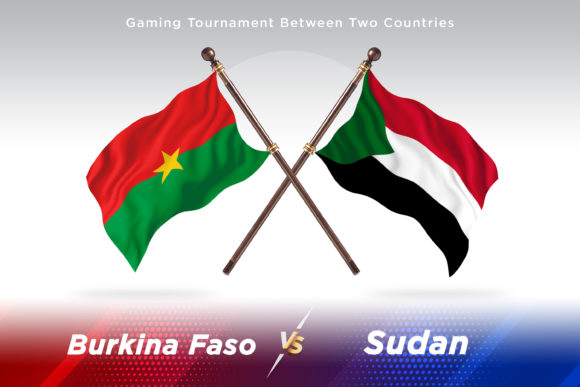
At first glance, the flags of Burkina Faso and Sudan appear to belong to entirely different visual traditions. The flag of Burkina Faso consists of two horizontal stripes—red on top and green on the bottom—with a five-pointed yellow star centered in the middle. This simplicity is deliberate and powerful. In contrast, Sudan's flag features a horizontal tricolor of red, white, and black, with a green triangle extending from the hoist side. The Burkina Faso Versus Sudan Two Flags comparison reveals how each nation uses color and geometry to encode its unique story.
Burkina Faso's flag is younger, adopted in 1984 following the revolutionary transformation led by Thomas Sankara. Sudan's flag was adopted in 1970, reflecting its post-colonial identity and pan-Arab aspirations. The structural differences are immediately apparent: Burkina Faso uses two bands and a central emblem, while Sudan uses three bands and a hoist triangle. These choices are not merely aesthetic—they represent different approaches to national symbolism and historical messaging.
Color Palettes and Their Meanings
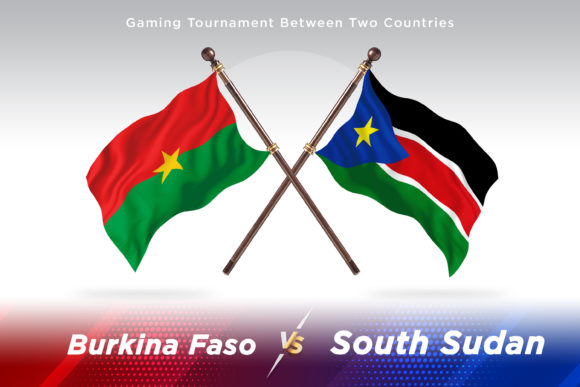
Color carries profound weight in both flags. In Burkina Faso's flag, red symbolizes the blood shed during the struggle for independence and the revolution that brought the country its current name, meaning "land of upright people." Green represents the country's rich agricultural potential and the hope for a prosperous future. The yellow star, positioned precisely in the center, stands as a guiding light—a symbol of the revolutionary ideals that shaped the nation.
Sudan's flag uses a different symbolic language. Red represents the struggle and sacrifices of the Sudanese people. White stands for peace and the bright future the nation aspires to. Black is a direct reference to the name "Sudan," which in Arabic means "land of the black people," and also honors the Mahdist Revolution. The green triangle is a nod to agriculture, prosperity, and the Islamic heritage of the country. When examining Burkina Faso Versus Sudan Two Flags, the color choices reveal contrasting priorities: Burkina Faso emphasizes revolutionary transformation and agrarian hope, while Sudan weaves together ethnic identity, religious heritage, and historical struggle.
Historical Context and National Identity
The historical circumstances surrounding each flag's adoption directly shaped their designs. Burkina Faso's flag emerged from a period of radical change. Upper Volta, the former colonial name, was shed in favor of a name that reflected the people's values. The flag was designed to be simple enough for anyone to reproduce and recognize, and its symbolism was meant to unite a diverse population under shared revolutionary principles.
Sudan's flag, meanwhile, was adopted after a period of political evolution. The design draws heavily from the pan-Arab colors—red, white, black, and green—that appear in various forms across many Arab nations. This choice signaled Sudan's alignment with broader regional movements and its identity as both an African and Arab country. The Burkina Faso Versus Sudan Two Flags comparison thus becomes a study in contrasting national narratives: one focused on internal revolution and self-redefinition, the other on regional solidarity and historical continuity.
Revolutionary Roots of Burkina Faso's Flag
Thomas Sankara's leadership from 1983 to 1987 brought sweeping changes to Burkina Faso, and the flag was a central part of this transformation. The old flag of Upper Volta featured three horizontal stripes of black, white, and red, representing the country's three main rivers. Sankara replaced it entirely, arguing that the new nation needed a new symbol. The yellow star was consciously chosen to evoke the guiding principles of the revolution—integrity, justice, and progress.
For educators and researchers studying African post-colonial identity, the Burkinabe flag offers a rich case study. It shows how a nation can use flag design to break with the past and articulate a new vision. The flag's simplicity also makes it highly functional for reproduction in low-resource settings, which was part of Sankara's practical vision for national unity.
Sudan's Flag and Pan-Arab Influences
Sudan's flag tells a different story. The pan-Arab colors were formalized during the Arab Revolt of 1916, and they have since been adopted by many countries including Egypt, Iraq, Syria, and Yemen. Sudan's inclusion of the green triangle adds a distinctive element while keeping the flag within a recognizable family of designs. This dual identity—African and Arab—is central to understanding Sudan's national character.
The flag was adopted on May 20, 1970, replacing a previous design that featured a blue triangle and green horizontal stripes. The change reflected the country's evolving political landscape and its desire to strengthen ties with the Arab world. For professionals and business owners working across the region, recognizing these design lineages can be valuable for cultural competence and market understanding.
Practical Use Cases and Display Protocols
Flags are not merely static symbols; they are used in daily life, official ceremonies, and international contexts. Understanding the protocols around the Burkina Faso Versus Sudan Two Flags can be useful for event planners, educators, and anyone involved in cross-cultural work.
- Government and diplomatic settings: Both flags are flown at embassies, international summits, and United Nations headquarters. When displayed together, the order is typically alphabetical based on the country's name in the host language.
- Educational environments: Flags are frequently used in geography and history lessons. Comparing the two flags helps students understand how symbolism works across cultures.
- Corporate and branding contexts: Companies operating in both countries may display the flags to signal local presence and cultural respect.
- Sporting events: During competitions like the Africa Cup of Nations or the Olympics, the flags represent national pride and are subject to strict display protocols.
For creators and designers working on projects that involve these flags, it is essential to use accurate proportions and colors. Burkina Faso's flag has a ratio of 2:3, while Sudan's flag also uses 2:3 but with different stripe widths. The green in Sudan's flag is typically a forest shade, while the green in Burkina Faso's flag is slightly brighter. These subtle differences matter in professional applications.
Comparative Analysis of Symbolic Elements
When placing Burkina Faso Versus Sudan Two Flags side by side, several structural observations emerge. Both flags use horizontal bands, but Burkina Faso uses two bands while Sudan uses three. Burkina Faso centers a star; Sudan places a triangle at the hoist. Both use red to signify struggle and sacrifice, and green to represent agriculture and hope. But the third and fourth colors diverge: Burkina Faso uses yellow for revolutionary guidance, while Sudan uses white for peace and black for ethnic and historical identity.
The star in Burkina Faso's flag is a classic symbol of unity and direction, found in many national flags around the world. The triangle in Sudan's flag is less common and creates a dynamic visual tension with the horizontal stripes. This geometric difference makes Sudan's flag appear more complex while Burkina Faso's flag is more balanced and centered.
For hobbyists and collectors of flags, these two designs offer an excellent study in contrast. Burkina Faso's flag is a textbook example of minimalist design, while Sudan's flag demonstrates how multiple symbolic elements can be layered into a coherent whole. Both flags are highly recognizable and carry deep meaning for their respective populations.
Cultural and Educational Relevance
Educators and researchers find rich material in the Burkina Faso Versus Sudan Two Flags comparison. The flags can be used to teach lessons about colonialism, revolution, pan-Arabism, African identity, and the role of symbolism in nation-building. For students, analyzing the flags helps develop visual literacy and cultural empathy.
Researchers studying national identity often point to flags as condensed representations of a country's values. Burkina Faso's flag reflects a rupture with the colonial past and a forward-looking revolutionary spirit. Sudan's flag reflects a layered identity that bridges African and Arab worlds. Both flags have evolved alongside their nations, and both continue to inspire pride and debate.
For business owners and professionals engaging with these markets, understanding the flags goes beyond mere courtesy. It signals a deeper awareness of the cultural and historical forces that shape consumer behavior, political stability, and regional partnerships. A company displaying the correct flag in the correct way demonstrates respect and competence.
Considerations for Designers and Creators
For graphic designers, web developers, and content creators working with the Burkina Faso Versus Sudan Two Flags, several practical considerations apply. First, always use official color references. Burkina Faso's red is a deep crimson (approximately Pantone 186 C), its green is a vibrant emerald (Pantone 347 C), and its yellow star is a bright gold (Pantone 116 C). Sudan's red is similar but slightly warmer (Pantone 186 C as well), its white is pure, its black is deep and neutral, and its green triangle uses a forest green (Pantone 356 C).
Second, respect proportions. Both flags use a 2:3 ratio, but Sudan's stripes are equal in width, while Burkina Faso's stripes are also equal. The star in Burkina Faso's flag should be precisely centered with one point facing upward. The triangle in Sudan's flag extends from the hoist and occupies approximately one-third of the flag's width.
Third, consider context. Using flags in commercial or creative projects often requires cultural sensitivity. Avoid altering the flag's design for artistic effect, as this can be perceived as disrespectful. When in doubt, consult official government sources or cultural advisors.
Finally, educators and creators can leverage the visual contrast between these two flags to illustrate broader lessons about African and Arab identity, post-colonial nation-building, and the power of symbols. The Burkina Faso Versus Sudan Two Flags topic offers endless opportunities for meaningful exploration in classrooms, workshops, and online content.
Observations on Use in Digital and Physical Spaces
In digital spaces, both flags are widely used in emoji form, country code top-level domains, and social media profiles. The emoji representations are standardized by Unicode and are identical to the official flags. For website developers, ensuring that flags render correctly across devices and browsers is important for user experience.
In physical spaces, flags are often displayed at airports, government buildings, and cultural centers. During national holidays—Independence Day on August 5 for Burkina Faso and Independence Day on January 1 for Sudan—the flags become central to celebrations. Understanding these occasions helps business owners and educators plan relevant activities and content.
The Burkina Faso Versus Sudan Two Flags discussion also extends to merchandise, souvenirs, and promotional materials. Companies that create products featuring national flags must ensure they have the legal right to do so in certain jurisdictions. While flags themselves are not typically copyrighted, their commercial use may be regulated to prevent misuse or misrepresentation.
For collectors and hobbyists, both flags are popular in flag-collecting communities. Burkina Faso's flag is often praised for its elegant simplicity, while Sudan's flag is appreciated for its distinctive triangular element. Online forums and social media groups dedicated to vexillology—the study of flags—frequently discuss the design choices and symbolism behind these and other African flags.
Ultimately, the comparison between Burkina Faso and Sudan's flags is more than an academic exercise. It is a window into the values, histories, and aspirations of two distinct nations. Whether you are an educator, a business owner, a designer, or simply a curious learner, the Burkina Faso Versus Sudan Two Flags topic offers practical insights and lasting relevance.