Burkina Faso Versus North Korea Flags: Design, Symbolism, and Cultural Contrasts
When comparing national flags from vastly different regions, the contrasts often reveal deeper stories about history, ideology, and national identity. The Burkina Faso Versus North Korea Flags comparison offers a fascinating study in how two nations—one in West Africa and one in East Asia—use color, shape, and emblem to project their values and aspirations. While one flag draws from revolutionary socialist traditions and the other from Pan-African symbolism and agrarian pride, both carry bold visual statements that resonate with their citizens and the world.
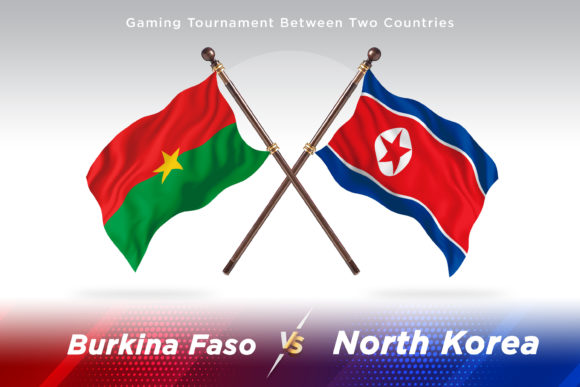
At first glance, the flags could hardly appear more different. Burkina Faso's flag features two horizontal stripes of red and green with a central yellow star, while North Korea's flag presents a broad red stripe flanked by narrow white and blue bands, with a red star inside a white circle near the hoist. Yet both employ red as a dominant color, both use stars as central motifs, and both have undergone historical revisions that reflect political shifts. Understanding these elements side by side clarifies not only what each nation values but also how flag design communicates complex ideas through simple geometry.
Burkina Faso's Flag: Pan-African Roots and Revolutionary Spirit
Adopted on August 4, 1984, following a coup led by Thomas Sankara, Burkina Faso's flag replaced the earlier flag of Upper Volta, which featured three horizontal stripes of black, white, and red. Sankara renamed the country from Upper Volta to Burkina Faso, meaning "land of upright people," and the new flag was designed to reflect the ideals of the revolution.
The flag consists of two equal horizontal bands: red on top and green on bottom, with a five-pointed yellow star centered in the middle. The red stripe symbolizes the blood shed during the struggle for independence and the ongoing fight against oppression, while the green represents the country's agricultural wealth, natural resources, and hope for a prosperous future. The yellow star stands for the guiding light of the revolution and the unity of the people under a common purpose.
This color scheme—red, green, and yellow—is deeply rooted in the Pan-Africanist movement, which uses these colors to signify solidarity across African nations, the continent's natural riches, and the blood of those who fought for freedom. Burkina Faso's flag thus links the nation to a broader continental identity while asserting its own revolutionary path.
North Korea's Flag: Socialist Symbolism and Korean Heritage
The flag of the Democratic People's Republic of Korea (DPRK), adopted on September 8, 1948, features a wide red central stripe bordered above and below by narrow white stripes, which are themselves edged with blue stripes. Near the hoist side, inside the red stripe, sits a white circle containing a five-pointed red star.
The red star is a universal symbol of socialism and communism, and in the North Korean context, it represents the leadership of the Workers' Party of Korea and the revolutionary spirit of the Korean people. The red stripe signifies the revolutionary traditions and the blood shed by patriots. The white stripes stand for purity, strength, and the Korean people's homogeneous ethnic identity, while the blue stripes represent sovereignty, peace, and the nation's connection to the sea—particularly the East Sea (Sea of Japan) and the Yellow Sea, which border the Korean peninsula.
The white circle holding the star also evokes traditional Korean cultural motifs, including the taegeuk symbol seen on the South Korean flag, though here it is simplified to a plain disk. This design element subtly references Korean heritage while keeping the overall message firmly aligned with socialist ideology.
Contrasting Symbolic Priorities
When examining Burkina Faso Versus North Korea Flags from a symbolic standpoint, the differences in emphasis become clear. Burkina Faso's flag foregrounds agrarian identity and Pan-African solidarity, while North Korea's flag foregrounds socialist revolution and national sovereignty. Both flags use red to evoke sacrifice, but the surrounding colors tell different stories.
Burkina Faso's green band directly ties the nation to its land and agriculture, which remains the backbone of its economy. Cotton, sorghum, millet, and livestock are central to Burkinabè life, and the green stripe honors that reality. In contrast, North Korea's blue stripes emphasize maritime boundaries and geopolitical positioning—a reminder that the Korean peninsula has been a flashpoint for international conflict and that the DPRK views itself as a sovereign state surrounded by larger powers.
The yellow star on Burkina Faso's flag is a single, prominent focal point, suggesting unity around a revolutionary ideal. North Korea's red star, enclosed in a white circle and set near the hoist, feels more contained and hierarchical—reflecting the structured, centralized nature of the state's political system. The white circle also suggests a kind of purity or completeness, aligning with the regime's emphasis on racial and ideological homogeneity.
How Burkina Faso's Flag Changed with Its Government
Before 1984, Upper Volta's flag used three horizontal stripes: black, white, and red. Those colors referenced the country's three main rivers—the Black Volta, White Volta, and Red Volta—which gave the colonial-era territory its name. When Thomas Sankara came to power, he sought to break completely with colonial legacy and create a new national identity. The Burkina Faso Versus North Korea Flags comparison here becomes interesting because North Korea's flag was also a break from the past—the Korean Empire's flag had used the taegeuk and trigrams, while Japanese colonial rule imposed the Rising Sun. Both current flags represent deliberate ideological ruptures.
Sankara's flag was designed to be simple, bold, and accessible, much like the man himself. It had to be easy to reproduce, easy to recognize, and packed with meaning that ordinary citizens could understand. The star, in particular, was meant to evoke hope and direction, much like the guiding star of the revolution. After Sankara's assassination in 1987, the flag remained unchanged, a testament to its enduring resonance with the Burkinabè people, even as the country's political direction shifted.
North Korea's Flag: Designed by Committee, Maintained by Ideology
North Korea's flag was reportedly designed with input from Soviet advisors and Kim Il-sung himself. The blue stripes were a distinctive addition—most socialist flags of the era used only red, gold, and white. The inclusion of blue made the DPRK flag stand out among its peers and gave it a maritime character that other communist states lacked. This was intentional: Korea is a peninsula, and the flag needed to reflect that geographic reality.
Interestingly, South Korea's flag uses the white background and black trigrams of the taegeukgi, while North Korea's flag uses a white circle on red. Despite the division, both flags retain a white element—white is a traditional Korean color representing peace and purity. In the Burkina Faso Versus North Korea Flags comparison, Burkina Faso has no traditional color motif comparable to this; its colors are entirely drawn from modern political movements rather than pre-colonial symbols.
Practical Benefits and Considerations for Flag Display
For anyone studying or using these flags in educational, diplomatic, or ceremonial settings, there are practical points worth noting.
- Color fastness and material choices: Burkina Faso's flag uses only three solid colors (red, green, yellow), which makes it straightforward to manufacture and less prone to fading inconsistencies. North Korea's flag, with its white circle and blue bands, requires more precise printing and alignment, especially for the star and circle combination.
- Symmetry and orientation: Burkina Faso's flag is perfectly symmetrical horizontally and vertically—the star is centered, so it looks the same from all angles. North Korea's flag is asymmetrical because the star-and-circle motif is placed near the hoist. This means the flag has a correct orientation and must be flown with the hoist side properly positioned. When displayed vertically, the star should remain oriented correctly, which requires attention.
- Ease of recognition: Burkina Faso's flag can be mistaken for other Pan-African flags, such as Mali's (which has three vertical stripes) or Senegal's (which also has a star but in vertical stripes). However, the two-band horizontal layout with a central star is distinctive enough once familiar. North Korea's flag is less easily confused with others, though it shares similarities with Cuba's flag (also a red triangle and star) and China's flag (a large star with smaller stars). The broad red stripe and blue borders make it immediately recognizable.
Modern Relevance in Global Context
In today's world, flags are used not only as national symbols but also as brand signals in international media, sports, and diplomacy. The Burkina Faso Versus North Korea Flags comparison appears in trivia, flag databases, and design studies precisely because they represent two different approaches to revolutionary flag design—one from the Global South and one from the socialist bloc.
Burkina Faso's flag has seen renewed interest in recent years as the country continues to grapple with political instability, terrorism, and economic challenges. The flag remains a unifying symbol, often flown at protests, sporting events, and national holidays. The yellow star, in particular, has become an icon of Burkinabè identity, appearing on merchandise, artwork, and social media profiles.
North Korea's flag, meanwhile, is one of the most recognizable symbols of the DPRK, often seen in news footage of military parades, diplomatic summits, and propaganda posters. It is strictly controlled within the country—citizens do not fly it casually, and it appears primarily on government buildings, monuments, and official events. Outside North Korea, the flag is sometimes used by Korean diaspora communities aligned with the DPRK, but it remains a politically charged emblem that sparks strong reactions.
From a design standpoint, both flags achieve what great flags do: they are simple enough to be drawn from memory, meaningful enough to inspire pride, and distinct enough to be recognized instantly. Burkina Faso's flag can be drawn with a horizontal line, a second horizontal line, and a star. North Korea's flag takes a bit more effort—three horizontal bands, two blue borders, a white circle, and a star—but the visual impact is powerful.
What These Flags Reveal About National Identity
Ultimately, the Burkina Faso Versus North Korea Flags comparison highlights how two nations with vastly different histories, geographies, and political systems can both turn to flags as tools for nation-building. Burkina Faso's flag was born from a revolution that sought to empower ordinary people and throw off colonial and neocolonial influences. North Korea's flag was crafted to legitimize a new state and unify a divided peninsula under a single ideology.
Burkina Faso's flag is optimistic and agrarian—it points toward growth, fertility, and collective struggle. North Korea's flag is stern and ideological—it emphasizes control, sovereignty, and eternal revolution. Both flags have remained unchanged for decades, a sign that their designs successfully captured something essential about their nations at critical moments in history.
For students of flag design, political science, or African and Asian studies, examining these two flags side by side offers a compact lesson in how visual symbols encode values. The red in both flags means sacrifice, but what that sacrifice serves—agricultural revolution or socialist statehood—differs profoundly. The stars in both flags represent guidance, but one is open and centered, while the other is contained and positioned.
Whether you encounter these flags at the United Nations, in a world atlas, or on a flag identification app, taking a moment to read their details reveals layers of meaning that go far beyond simple decoration. Flags are not just pieces of cloth. They are statements of purpose, and the Burkina Faso Versus North Korea Flags comparison demonstrates just how much two flags can say—even when they say very different things.