Burma vs Sri Lanka: A Tale of Two Flags – History, Symbolism, and National Identity
Flags are far more than pieces of cloth fluttering in the wind. They are condensed stories of a nation's past, present, and aspirations. When you look at the flag of Burma (Myanmar) and the flag of Sri Lanka, you are looking at two distinct visual languages, each speaking volumes about geography, religion, colonial history, and cultural evolution. For travelers, students of history, or global citizens, understanding these flags unlocks a deeper appreciation of Southeast Asia and the Indian subcontinent. This article will explore the ground-up meaning of each flag, compare their designs, and clarify why understanding them matters in modern life.
History and Evolution
Before diving into the current design, it is essential to understand the name itself. The country was known as Burma for generations, a name derived from the dominant Bamar ethnic group. In 1989, the military government changed the official English name to Myanmar. While many governments and international organizations now use "Myanmar," the name "Burma" remains in use by those who do not recognize the military regime's authority. Consequently, the flag debate is sometimes tangled in the naming debate.
The very first flag of independent Burma, adopted in 1948, featured a red field with a blue canton containing a large white star, surrounded by five smaller stars. The red symbolized courage, the blue stood for peace and stability, and the stars represented the union of the states. That flag served the country for over six decades. In 2010, however, the military government unveiled a completely new design as part of a broader rebranding effort. This change was deeply political, intended to signal a break from the past—even though the government itself remained largely unchanged.
Symbolism of the Current Flag
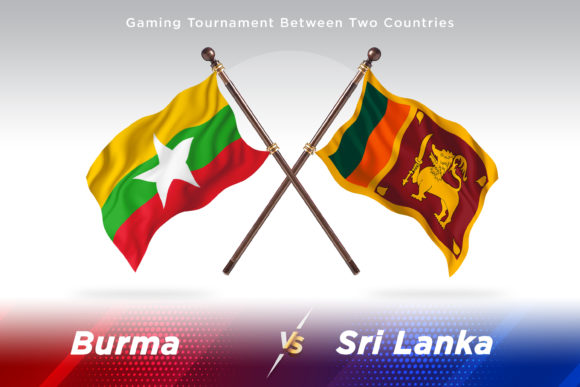
The current flag of Myanmar consists of three horizontal stripes: yellow, green, and red, with a large white five-pointed star centered in the middle. Each color carries specific meaning:
- Yellow: Represents solidarity and the unity of all ethnic groups within the nation. It is also associated with the Buddhist faith, which is central to Myanmar's identity.
- Green: Symbolizes peace, tranquility, and the lush agricultural landscape of the country.
- Red: Stands for courage, determination, and the blood shed in the struggle for independence and national sovereignty.
- White Star: Represents the eternal existence of the union and the bright future of the nation. It is also a nod to the earlier flag's symbolism of unity.
The colors are reminiscent of the flag used during the Japanese occupation in World War II, but the horizontal stripes are a fresh arrangement. Interestingly, the colors also align with the Pan-African colors, though this is purely coincidental. What is most striking is the absence of a canton or any complex emblem. The design is deliberately simple, aiming to be recognizable at a distance and during political transitions.
History and Evolution
Sri Lanka's flag is far older in conception. Known as the Lion Flag, its design draws directly from the standard of the ancient Sinhalese Kingdom. The central motif—a golden lion holding a sword—has been used for centuries. The modern version was officially adopted in 1978 after a series of modifications following independence from Britain in 1948.
The original flag of the Kingdom of Kandy (the last independent kingdom before colonial rule) featured a golden lion on a red background. When Sri Lanka gained independence, the new government wanted a flag that represented not just the Sinhalese majority but also the country's religious and ethnic diversity. After extensive consultation, four leaves of the Bo tree (pipal tree) were added in each corner of the flag, and two vertical stripes were added on the hoist side—one green and one orange. These additions were meant to include the country's Muslim and Tamil communities respectively.
Symbolism of the Lion Flag
Every element of the Sri Lankan flag is loaded with meaning:
- The Golden Lion: Represents the Sinhalese ethnicity and the bravery and strength of the nation. The sword in its right paw symbolizes power and the authority to defend the land.
- The Red Background: Symbolizes the rich color of the soil and the blood of those who fought for the nation's freedom.
- The Four Bo Leaves: These represent the four noble virtues of Buddhism: loving-kindness, compassion, sympathetic joy, and equanimity. They also reflect the deep Buddhist heritage of the country.
- The Orange Stripe: Represents the Tamil ethnic community, one of the two major minority groups.
- The Green Stripe: Represents the Muslim community (Moor ethnic group) in Sri Lanka.
- The Yellow Border: Represents the unity of the nation and the protection of Buddhism by the state.
Few flags in the world so explicitly incorporate ethnic and religious minorities into their design. The Lion Flag is therefore a testament to Sri Lanka's attempt to balance majority identity with pluralism, though the country has certainly faced challenges in achieving that harmony in practice.
Design and Color Choices
On the surface, the two flags are radically different. Myanmar's flag is a simple tricolor with a star—modern, clean, and reminiscent of many post-colonial flags in Africa and Asia. Sri Lanka's flag is ornate, with a lion, leaves, and multiple borders—more akin to royal standards or ancient heraldry. The difference in complexity reflects each nation's historical path: Myanmar's flag was redesigned in the 21st century to project a clean, unified image, while Sri Lanka's flag proudly preserves a pre-colonial royal symbol.
Both flags use red as a dominant color, symbolizing courage and sacrifice. Yellow appears in both: in the Myanmar flag as a stripe, and in the Sri Lankan flag as a border and the lion's color. Green appears in both as well: in Myanmar's center stripe and in Sri Lanka's vertical stripe for the Muslim community. However, the meanings diverge: Myanmar's green represents peace and agriculture, while Sri Lanka's green represents a specific ethnic group.
Cultural and Historical Narratives
The Myanmar flag tells a story of rebooting national identity. The abandonment of the old flag in 2010 was part of a broader effort to move beyond decades of military rule and ethnic conflict. The new flag deliberately avoids any specific ethnic or religious symbolism—there is no Buddhist wheel, no star for a particular group, no reference to the monarchy. It aims to be inclusive through abstraction.
The Sri Lankan flag tells a story of layered identity. It openly acknowledges the majority Buddhist Sinhalese heritage while also giving explicit recognition to Tamils and Muslims. This is both a strength and a vulnerability. On one hand, it is rare for a national flag to include minority communities so visibly. On the other hand, the flag can become a point of tension if any community feels the representation is merely symbolic without real political inclusion.
Common Misunderstandings About Both Flags
One common mistake is assuming the Myanmar flag has always looked the way it does today. Many people remember the old flag with the blue canton and white star, and they may not realize the change occurred in 2010. Another misunderstanding is that the new flag mirrors the flag of the Tatmadaw (the military), which also uses yellow, green, and red. While the colors are similar, the military flag has a different arrangement and includes a gearwheel and rice plant.
For Sri Lanka, a frequent misconception is that the lion represents only the ancient Sinhalese kingdom and ignores other groups. In reality, the flag was deliberately modified in 1978 to add the orange and green stripes precisely to include Tamils and Muslims. Another misunderstanding is that the four Bo leaves are leaves from the Bodhi tree (the specific tree under which Buddha attained enlightenment). While they are indeed Bo leaves, they represent the four virtues rather than a single tree.
Practical Relevance in Modern Life, Travel, and Business
Understanding these two flags is not merely academic. For travelers, recognizing the flags helps with cultural sensitivity. In Myanmar, the flag is a sensitive topic because it was changed under a military government that many still oppose. Using the wrong flag (the old one) in a business logo or travel blog can signal political alignment. In Sri Lanka, the flag is widely revered and appears everywhere from cricket stadiums to temple entrances. Displaying it incorrectly—such as with the lion facing the wrong direction—can be seen as disrespectful.
For businesses operating in these countries, understanding flag symbolism is crucial for branding. A company designing packaging for export to Myanmar should use the current flag (yellow, green, red with white star) to show respect for current national identity. For Sri Lanka, using the flag in marketing requires acknowledging all three communities represented in the design. A brand that only highlights the lion without referencing the minority stripes might be perceived as exclusionary.
In education, teachers can use these two flags as case studies for teaching comparative politics, colonialism, and national identity. Students can analyze how different nations choose to represent themselves and how those choices evolve over time. The Myanmar flag's redesign is an excellent example of how governments attempt to rebrand during political transitions. The Sri Lanka flag demonstrates how national symbols can be deliberately inclusive—or at least designed with inclusion in mind.
Broader Lessons from National Flags
The flags of Burma and Sri Lanka remind us that national symbols are not static. They change, they evolve, and they carry the weight of political struggles, ethnic tensions, and cultural pride. When you see a flag, you are seeing a snapshot of a country's self-image at a particular moment in history. Myanmar's flag is a young flag—only adopted in 2010—and it reflects a nation still searching for unity after decades of conflict. Sri Lanka's flag is an ancient symbol adapted for modern pluralism, reflecting a country that has long grappled with diversity and identity.
Both flags also teach us that simplicity versus complexity is not a measure of quality. A simple flag like Myanmar's can be powerful because it is memorable and uncluttered. A complex flag like Sri Lanka's can be powerful because every element has meaning. Neither approach is better; both reflect the unique circumstances of their nations.
Ultimately, understanding the stories behind these flags helps us see the countries themselves more clearly. Whether you are planning a trip to Yangon or Colombo, studying political science, or simply curious about the world, the flags of Burma and Sri Lanka offer rich lessons in how nations see themselves—and how they wish to be seen by the world. The next time you see these two flags side by side, you will understand that they are not just different in color and shape; they are different in their very approach to nationhood, history, and hope.