Brunei vs Solomon Islands: A Tale of Two Flags
Flags serve as the visual shorthand for a nation's identity. When you place the flag of Brunei Darussalam next to the flag of the Solomon Islands, you are looking at two distinct worlds colliding in color and form. This comparison—Brunei versus Solomon Islands two flags—is a fascinating study in political, cultural, and visual design differences. One speaks of an ancient Islamic sultanate steeped in tradition and royal authority. The other tells the story of a Melanesian archipelago navigating its modern democratic path. Whether you are a traveler, a designer, an educator, or simply a curious mind, understanding these differences offers a rich perspective on how nations choose to represent themselves.
First Glance: A Visual Contrast
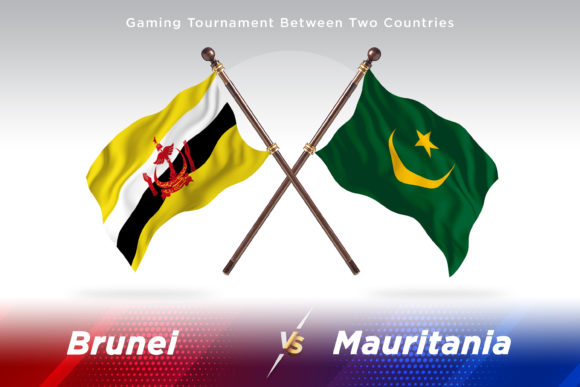
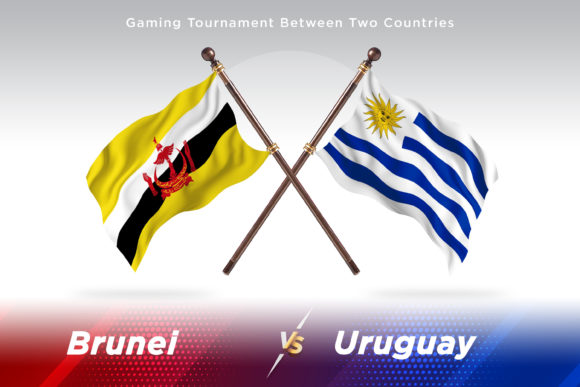
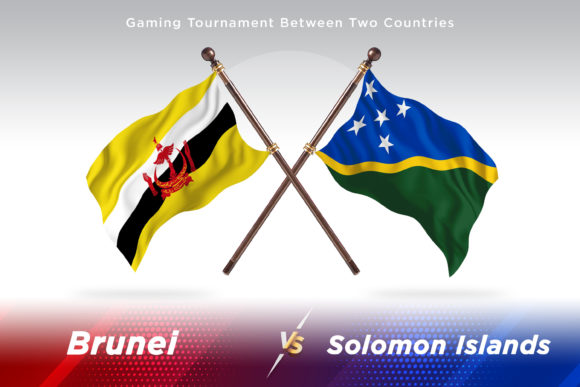
For the uninitiated, the differences are immediate and striking. Brunei's flag is dominated by a vivid yellow field, bisected diagonally by a black stripe and a white stripe. At the center sits a detailed red crest featuring a crescent, a parasol, wings, and hands. It conveys royalty, Islam, and a deeply rooted hierarchical structure.
The Solomon Islands flag offers a completely different energy. A blue triangle sits at the top left, a green triangle sits at the bottom right, and a bold yellow diagonal stripe separates them powerfully. Five white stars arc gracefully across the blue field. It feels modern, maritime, and aligned with the natural environment. For the hobbyist or beginner, this visual comparison is an instant geography lesson. You do not need to be a vexillologist to see that Brunei is centered on its monarchy and faith, while the Solomon Islands mirrors the peace, ocean, and land of the Pacific.
Why does this matter to a casual observer or traveler? If you are visiting embassies, navigating an international airport, or watching a global sporting event, quickly distinguishing these flags becomes a practical skill. The Brunei flag's yellow background is a rarity among Southeast Asian flags, making it easy to spot. The Solomon Islands flag, with its distinct diagonal yellow stripe and five stars, is equally unique in the Pacific context, preventing confusion with other blue-yellow-green flags like the Bahamas or The Gambia.
Decoding the Symbols: What the Elements Actually Mean
Moving beyond first impressions into the realm of meaning is where the true value lies for educators, students, and lifelong learners. Each element on both flags was chosen with intent.
Brunei's Symbolic Language
The yellow field represents the Sultan, the supreme ruler of Brunei, a figure central to the nation's identity. The diagonal black and white stripes represent the two principal ministers of state, historically the Pengiran Bendahara and the Pengiran Pemancha, who played crucial roles in the sultanate's governance. The red crest in the center is a powerhouse of meaning: the crescent moon symbolizes Islam, the national faith. The parasol (payung) stands for royal protection and justice. The wings (sayap) represent the protection of peace, justice, and prosperity. Finally, the two hands on the sides signify the government's duty to preserve and uplift the people. This is a complex, layered, and highly specific heraldic tradition.
Solomon Islands' Democratic Design
The Solomon Islands flag takes a more modernist approach. The five white stars represent the five original administrative districts: Malaita, Western, Eastern, Guadalcanal, and Central. The blue field symbolizes the Pacific Ocean that surrounds and sustains the nation. The green represents the lush, fertile land and the importance of agriculture. The yellow diagonal stripe represents the sun, life, and the warmth of the people. It is a beautifully democratic and inclusive design—straightforward, aspirational, and easy to understand. For an educator, this contrast is a goldmine. One flag is a complex historical emblem, the other a classic modernist national symbol. Teaching them side-by-side helps students understand how different cultures compress their entire history, geography, and values into a single image.
The Practical Eye: Design Complexity and Usability
For creators, designers, marketers, and business owners, flags are often raw material. They appear in presentations, on websites, in international branding campaigns, and on merchandise. The priorities here shift from historical meaning to aesthetics, flexibility, and commercial utility.
Color Palettes and Mood
- Brunei's Palette: Yellow, Black, White, Red. This is a high-contrast, regal combination. Yellow and red together is historically a powerful, attention-grabbing mix used by many empires and royal houses. It feels heavy, important, and traditional.
- Solomon Islands' Palette: Royal Blue, Deep Green, Yellow, White. This is a natural, oceanic palette. It is harmonious, calming, and evocative of travel and nature. It feels light, progressive, and accessible.
Flexibility and Reproduction
For a designer, the Solomon Islands flag wins on sheer scalability and simplicity. A child can draw it from memory. It works flawlessly in digital media, small social media icons, and large trade show banners. The geometric shapes translate perfectly across formats.
Brunei's flag, however, presents a challenge and an opportunity. The detailed crest means it demands high-quality rendering. On a poorly printed brochure or a low-resolution website, the emblem can become a blur. For a luxury brand or a travel agency looking to evoke exotic opulence, the Brunei flag is visually rich and textured. If you are designing an eco-resort logo in the Pacific, the blues and greens of the Solomon Islands flag would be more appropriate. If you are creating a presentation on Southeast Asian trade, the bold formality of Brunei's flag sets a serious, professional tone.
Matching the Flag to Your Purpose: A Practical Guide
How do you know which of these two flags is more relevant to your specific need? It depends entirely on your field of interest and what you are trying to achieve.
For Learning and Cultural Depth
If you are an educator, a student of history, or a cultural enthusiast, the Brunei flag offers a semester's worth of material in a single icon. The layers of symbolism—monarchy, Islam, justice, duty—are deeply intertwined with the country's constitution and national philosophy (Melayu Islam Beraja). You will spend more time unpacking the Brunei flag.
For Design, Branding, and Modern Aesthetics
If you are a graphic designer, a web developer, or a marketer, the Solomon Islands flag is arguably more versatile. Its clean geometry, standard shapes, and modern color palette make it highly adaptable for contemporary design projects. It fits the current trend towards flat, minimal vector design. It is bright, recognizable, and easy to drop into a layout without overwhelming it. If your priority is a clean, modern visual, this flag is your better template.
For Travel, Logistics, and Practical Recognition
Both flags are relatively easy to recognize compared to many tricolors. However, the Solomon Islands flag can sometimes be mistaken for other Pacific or Caribbean flags at a distance if the stars are not clear. The yellow diagonal is the key differentiator. Brunei's yellow base is virtually unique in Southeast Asia. For a traveler or a logistics professional, learning the specific star pattern of the Solomon Islands and the unique crest of Brunei is a quick, practical skill that avoids errors in documentation or identification.
For Commercial Value and Market Entry
A business owner or entrepreneur evaluating these flags looks at what they represent economically. Brunei is a high-GDP nation with a stable economy rooted in oil and gas. Its flag represents established wealth, stability, and formality. Doing business there demands respect for hierarchy and tradition, which the flag reflects. The Solomon Islands represents developing potential, with opportunities in fisheries, tourism, and forestry. Its flag signals openness, connection to nature, and a more relaxed, community-focused business culture. Respecting these visual signals is part of market intelligence and cultural sensitivity.
Ultimately, the Brunei versus Solomon Islands two flags comparison is not a competition. It is a masterclass in contrast. One is a dense, regal historical document. The other is a bright, open window into a Pacific nation's soul. By understanding both, you equip yourself with a sharper visual vocabulary—whether you are teaching a class, designing a logo, planning a trip, or signing an international deal. Both flags are small squares of fabric that hold the weight of entire worlds, and knowing the difference is a sign of genuine global awareness.