Brunei Versus Mauritania: A Tale of Two Flags and Their Deeper Meanings
Flags are far more than colourful pieces of fabric. They are visual shorthand for a nation's identity, history, values, and aspirations. When you look at the flags of Brunei and Mauritania side by side, you might notice a few surface similarities – both feature a crescent moon, both draw heavily on Islamic symbolism, and both use bold, striking colours. Yet each flag tells a profoundly different story about the country it represents. Understanding these two flags in detail not only enriches your knowledge of vexillology (the study of flags) but also offers a window into the cultures, governance, and worldviews of two distinct nations on opposite sides of the globe.
This article will take you on a journey through the design, symbolism, history, and modern relevance of the Bruneian and Mauritanian flags. By the end, you will be able to recognize each flag with confidence, explain what its elements mean, and appreciate the unique narratives woven into their stripes, colours, and emblems.
An Overview of the Brunei Flag
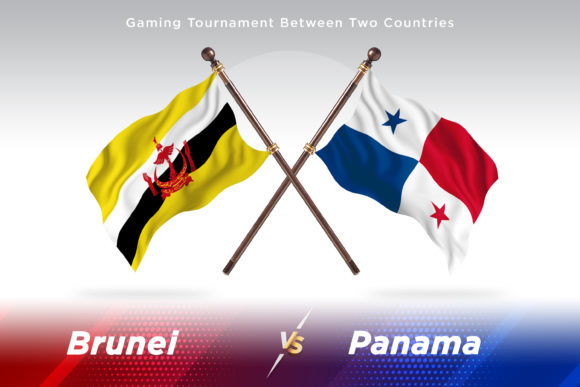
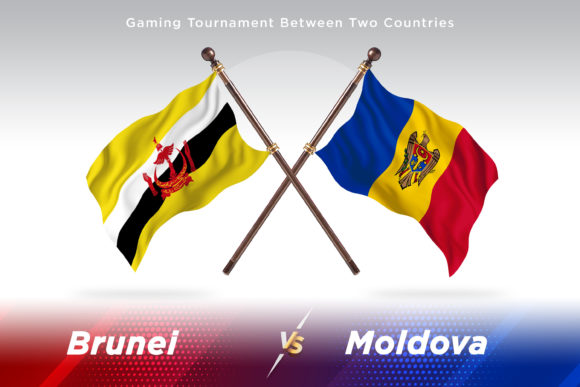
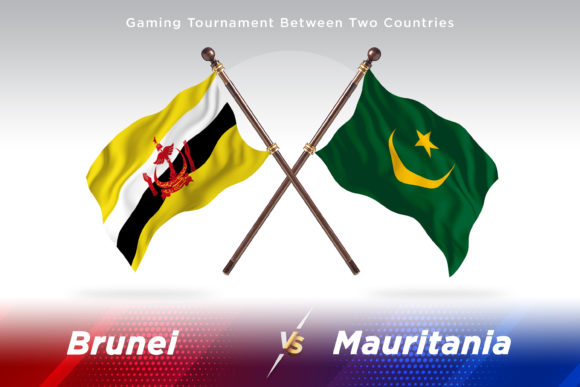
The national flag of Brunei – officially known as Brunei Darussalam, meaning "Abode of Peace" – is a striking combination of yellow, white, black, and red. At first glance, the flag features a bold yellow field crossed diagonally by white and black bands. In the centre sits the country's national crest, rendered in red. The flag was officially adopted on 29 September 1959, when Brunei became a self-governing protectorate under British protection, and it was retained upon full independence on 1 January 1984.
Design and Colours
- Yellow field: Yellow is the traditional colour of royalty in Southeast Asia, and in Brunei it specifically represents the Sultan – the head of state and head of government. The entire yellow background signifies the absolute authority of the Sultan.
- White and black diagonal stripes: These two bands run from the top left to the bottom right of the flag. They represent Brunei's two principal ministers: the Pengiran Bendahara (the First Minister, symbolized by white) and the Pengiran Pemancha (the Second Minister, symbolized by black). Historically, these stripes also recall the flags used by early Bruneian sultanates.
- Red crest: Centred over the stripes, the national crest is the most intricate element of the flag.
The National Crest: A Closer Look
The crest of Brunei is rich with symbolic meaning and is almost a miniature story in itself. It contains five key components:
- The crescent moon: This is the most prominent symbol of Islam, the official religion of Brunei. Inside the crescent is inscribed the national motto in Arabic: "Always render service with God's guidance."
- The parasol (or umbrella): Above the crescent sits a royal parasol, a traditional symbol of monarchy and royal authority in many Asian cultures. It signifies that the Sultan is the protector of the people.
- The two hands (or gauntlets): On either side of the crescent and parasol are two stylized hands (sometimes described as gauntlets or wings). These represent the government's duty to protect the people and uphold justice.
- The flag (or pennant): Below the parasol, a small yellow pennant hangs, further reinforcing the royal theme.
- The wings: Four feathers on each side of the crest symbolize the protection of justice, tranquillity, prosperity, and peace.
Together, these elements make the Brunei flag a powerful statement of Islamic monarchy, divine guidance, and national unity under the Sultan's rule.
An Overview of the Mauritania Flag
The flag of Mauritania is equally rich in symbolism but takes a very different visual approach. The current flag – adopted on 15 August 2017 – is a modification of the original flag introduced upon independence from France in 1960. The flag features a green field with a gold star and crescent in the centre, and two horizontal red stripes at the top and bottom edges.
Design and Colours
- Green field: Green is a traditional colour of Islam, representing hope, fertility, and the country's agricultural heritage. It also symbolizes the Islamic faith that is central to Mauritanian identity.
- Gold star and crescent: These two symbols are among the most recognizable emblems of Islam worldwide. The crescent represents progress, while the five-pointed star signifies light, knowledge, and the five pillars of Islam.
- Red stripes: Added in the 2017 flag redesign, the red stripes at the top and bottom represent the sacrifices of the Mauritanian people in their struggle for independence and their ongoing efforts to defend the nation. The colour red symbolizes blood, courage, and patriotism.
A Brief History of the 2017 Change
Many casual observers may not realize that the Mauritanian flag was modified relatively recently. The original independence flag of 1960 was simply green with a gold star and crescent. In 2017, President Mohamed Ould Abdel Aziz proposed adding two red stripes to honour the soldiers who died fighting for the country and to reflect the sacrifices made during the colonial era. A national referendum approved the change, and the new flag was officially hoisted on 15 August 2017. This redesign makes Mauritania's flag one of the most recently updated national flags in the world.
Key Similarities Between the Two Flags
At first glance, Brunei and Mauritania share several visual and symbolic features. Recognizing these similarities can help readers draw connections between two otherwise very different nations.
- Islamic symbolism: Both flags prominently feature a crescent moon, and both use colours (yellow/gold and green) that are deeply associated with Islamic tradition. The crescent is a near-universal symbol of the Islamic faith across national flags.
- Use of red for royal or sacrificial meaning: Brunei uses red for its crest, which represents the Sultan and the nation's royal heritage. Mauritania uses red to symbolize sacrifice and patriotism. Though the contexts differ, the colour red carries weighty national significance in both cases.
- Diagonal and horizontal structure: While the layouts are different – Brunei uses diagonal bands, Mauritania uses horizontal stripes – both flags employ stripes as a core design element, making them visually dynamic.
- Central emblem: Both flags place their most important symbol in the centre: Brunei's crest and Mauritania's star and crescent. This central focus draws the viewer's eye and emphasizes the core values of each nation.
Key Differences Between the Two Flags
Despite these similarities, the differences are more numerous and more revealing.
- Background colour: Brunei's field is yellow (royalty), while Mauritania's is green (Islam and agriculture). This single difference immediately tells you what each nation views as its primary identity: Brunei is a monarchy first, while Mauritania emphasizes its Islamic character.
- Stripes: Brunei's diagonal white and black stripes represent specific political ministers and are a nod to historical sultanate flags. Mauritania's red stripes are a modern addition representing sacrifice and are purely horizontal at the edges of the flag.
- Emblem complexity: Brunei's crest is intricate, containing multiple elements (crescent, parasol, hands, wings, flag). Mauritania's emblem is simple and minimalist – a single star and crescent. This contrast reflects different cultural aesthetics: Brunei embraces elaborate royal iconography, while Mauritania favours clean, pan-Arab and pan-Islamic design.
- Historical evolution: Brunei's flag has remained largely unchanged since 1959. Mauritania's flag was updated in 2017, making it one of the newer national flags. This shows that flags can evolve to reflect a nation's changing self-understanding.
Practical and Modern Relevance
Understanding these flags matters beyond trivia or academic study. Flags appear in countless daily contexts: on government buildings, at international sporting events, in news reports, on passports and currency, and even in digital emoji form. Recognizing and correctly interpreting the flag of Brunei or Mauritania can deepen your understanding of news stories about these countries. For instance, when you see the red stripes on Mauritania's flag, you are reminded of the nation's struggle for independence. When you see the parasol on Brunei's flag, you recall the central role of the Sultan in the country's political life.
For travellers, businesspeople, or students of international relations, being able to identify and explain these flags demonstrates cultural literacy and respect. It can also spark meaningful conversations about identity, religion, and governance. In an increasingly interconnected world, the ability to decode symbols is a form of visual fluency that enhances communication and empathy.
Moreover, flags are often used in design and branding. The colour palettes of Brunei (yellow, white, black, red) and Mauritania (green, gold, red) are sometimes drawn upon in marketing campaigns, educational materials, or artistic projects that aim to evoke specific cultural associations. Knowing the meaning behind these colours helps designers use them more intentionally.
Common Misunderstandings Clarified
Many people mistakenly assume that any flag with a crescent moon and star automatically represents an Arab country. Both Brunei and Mauritania are Muslim-majority nations, but Brunei is located in Southeast Asia, not the Middle East. Mauritania is in Northwest Africa and is considered part of the Maghreb region. The crescent and star are Islamic symbols, not exclusively Arab ones, and they appear on the flags of many non-Arab Muslim nations, including Pakistan, Malaysia, and Turkey.
Another common confusion is thinking that Brunei's flag features a bird or an eagle. In fact, the elements on either side of the crest are stylized hands or gauntlets, not wings of a bird. The wings are part of the crest but are distinct from the hands.
Finally, some people mistakenly believe that Mauritania's red stripes have always been part of the flag. In reality, they are a very recent addition (2017), and many older images or references may still show the plain green flag. This is an important detail when researching historical events or verifying flag designs in archival materials.
Conclusion
The flags of Brunei and Mauritania are eloquent statements of national identity. Brunei's flag tells a story of absolute monarchy, Islamic faith, and royal tradition, all centred on the figure of the Sultan. Mauritania's flag speaks of Islamic unity, sacrifice for independence, and a nation looking toward progress. While both share the crescent and star as symbols of Islam, their colour choices, layout, and emblematic details reveal vastly different historical and cultural paths.
By taking the time to understand these two flags in depth, you gain more than just the ability to tell them apart. You gain insight into the values that shape two nations: Brunei's hierarchical, ceremonial, and royalist tradition, and Mauritania's more recent, republican, and sacrifice-oriented identity. In a world where symbols are often taken for granted, learning to read flags is a small but meaningful way to become a more informed and culturally aware global citizen.