Brunei Versus Mali Two Flags: Design, Symbolism, and Cultural Identity Compared
When examining national flags from around the world, few comparisons reveal as much about cultural priorities and historical context as the contrast between the flags of Brunei and Mali. At first glance, Brunei Versus Mali Two Flags appear to share little in common—one is a bold tricolor rooted in pan-African solidarity, the other a detailed emblematic design reflecting absolute monarchy and Islamic tradition. Yet the exercise of placing them side by side offers valuable insight into how nations encode identity, governance, and values into fabric and color. For designers, educators, marketers, and cultural researchers, understanding what each flag communicates—and how effectively it does so—can sharpen one's appreciation for visual symbolism and its real-world application.
What Makes Brunei Versus Mali Two Flags Worth Discussing
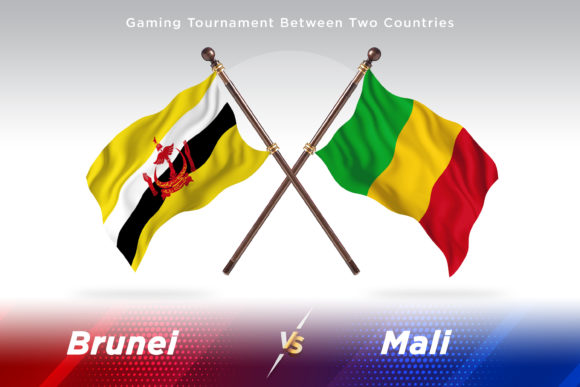
The flags of Brunei and Mali represent two fundamentally different approaches to national branding. Brunei's flag, adopted in its current form in 1959, is dominated by a yellow field bisected by diagonal white and black stripes, with the national crest centered prominently. Mali's flag, adopted in 1961 after the dissolution of the Mali Federation, is a simple vertical tricolor of green, gold, and red. The contrast between elaborate heraldry and minimalist geometry makes Brunei Versus Mali Two Flags a compelling case study in how nations choose to present themselves to the world. Beyond aesthetics, the comparison touches on questions of readability, cultural symbolism, historical continuity, and practical usability across media and contexts.
Brunei's Flag: Emblematic and Hierarchical
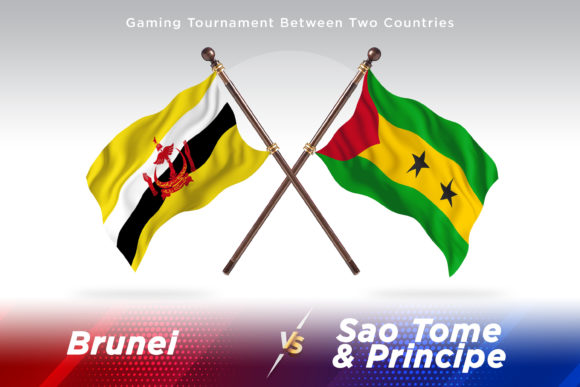
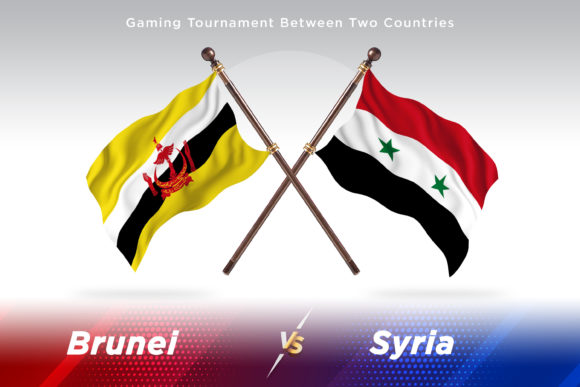
Brunei's flag uses a yellow background—a color traditionally associated with royalty across Southeast Asia. The yellow field signals the supreme authority of the Sultan, who serves as both head of state and head of religion. Two diagonal bands run from the top left to the bottom right: one white, one black. These represent Brunei's two principal ministers, the Pengiran Bendahara and the Pengiran Pemancha, respectively. At the center sits the national emblem, which includes a crescent (symbolizing Islam), a parasol (representing monarchy), a pair of upturned hands (signifying the government's duty to protect its people), and Arabic script reading "Always render service with God's guidance."
The emblem is detailed and intricate. It requires a certain viewing distance and resolution to be fully legible. This is not a flag designed for rapid identification from a distance—it rewards closer inspection and cultural knowledge. From a practical standpoint, the Brunei flag is rich in meaning but demanding in execution. It performs best when displayed at a size and scale that allows its central elements to be clearly seen.
Mali's Flag: Minimalist and Pan-African
Mali's flag consists of three equal vertical bands: green on the hoist side, gold in the center, and red on the fly side. Green represents the fertility of the land and the hope of the nation, gold symbolizes the country's mineral wealth and the purity of the people, and red stands for the blood shed in the struggle for independence. The design follows the classic tricolor format, a format widely adopted by post-colonial African nations. There is no emblem, no text, no complex geometry. The flag is immediately recognizable at any scale—on a large pole, on a lapel pin, or as a digital icon on a small screen.
The simplicity of Mali's flag is one of its greatest strengths. It communicates clearly and consistently across all media. It is also highly reproducible: anyone with access to three colors of fabric can create a reasonably accurate version. This matters in contexts where flags are produced locally or under resource constraints. The flag's meaning, however, is more abstract than Brunei's. Without knowledge of the color symbolism, a viewer may see only a pleasing arrangement of hues rather than a specific political or cultural narrative.
Brunei: Rich in Cultural Specificity
The primary strength of Brunei's flag is its cultural density. Every element carries specific meaning tied to the nation's history, religion, and governance structure. For an educator teaching about Southeast Asian monarchies or Islamic state symbolism, Brunei Versus Mali Two Flags provides a vivid example of how flags can function as visual encyclopedias. The flag also reinforces national identity internally—citizens who understand the emblem's components are reminded of their shared values and hierarchical structure.
However, the complexity comes with trade-offs. The emblem can be difficult to reproduce accurately, especially at small sizes. In digital contexts—social media avatars, favicon-sized icons, low-resolution displays—the details may become muddled or invisible. For a brand or organization using the Brunei flag in marketing materials, careful attention to scaling and resolution is necessary.
Mali: Universal and Scalable
Mali's flag excels in versatility. Its tricolor format is one of the most recognized flag structures in the world, and its color choices—green, gold, red—are shared by many other African nations, creating a visual family of flags that reinforces regional identity. For a graphic designer or content creator working across multiple platforms, the Mali flag is easy to integrate without loss of clarity. It works equally well in print, web, video, and embroidery.
The trade-off is that the flag's meaning is less immediately accessible. Without context, a viewer may not associate the colors with Mali specifically, or with the specific values the nation intends to convey. The flag relies on the viewer's prior knowledge or on accompanying educational material to fully communicate its message. In a direct comparison, Brunei Versus Mali Two Flags demonstrates the tension between maximum symbolic density and maximum visual clarity.
Real-World Performance and Use Cases
In real-world settings, the flags serve different audiences and purposes effectively. Brunei's flag is well-suited for ceremonial use, official government buildings, educational exhibits, and cultural presentations where viewers have the time and proximity to examine its details. It also works well in large-format applications—billboards, stadium displays, parade floats—where the emblem can be rendered at substantial size.
Mali's flag performs admirably in contexts requiring quick recognition: international sporting events, news broadcasts, travel websites, and mobile applications. If you are building a digital dashboard that displays multiple national flags at once, the Mali flag will remain identifiable at thumbnail size, while Brunei's flag may become a yellow field with indistinct marks at its center.
For a small business owner creating multicultural content or a freelancer designing a comparison infographic, the practical recommendation is to consider your primary medium. If your work will be viewed primarily on large screens or in print at a generous size, Brunei's flag offers richer storytelling potential. If your content will be consumed on mobile devices or at small scale, Mali's flag ensures consistent legibility.
Who Benefits Most from Understanding This Comparison
Marketers and brand strategists can learn from Brunei Versus Mali Two Flags when deciding how much complexity to embed in a logo or visual identity. A brand that operates in a crowded digital space may benefit from the clarity of Mali's approach. A brand that serves a niche, culturally specific audience may find Brunei's emblematic depth more engaging.
Educators and publishers can use the comparison to teach visual literacy, semiotics, and cross-cultural communication. The two flags present a clear before-and-after contrast in terms of design philosophy, making them ideal for classroom discussion or editorial content.
Graphic designers and content creators working with international audiences will gain a practical understanding of how flag design affects digital performance. Knowing that some flags scale well and others do not is a functional consideration that directly impacts user experience.
Bloggers and serious hobbyists interested in vexillology—the study of flags—will find that Brunei Versus Mali Two Flags represents a classic example of the divide between "heraldic" traditions and "geometric" traditions in national flag design. This is a foundational distinction in the field.
Limitations and Considerations
No comparison is complete without acknowledging context. Brunei and Mali are nations with different histories, political systems, and geographic regions. Their flags were designed to meet different internal and external communication needs. Judging one as objectively "better" than the other would miss the point. Instead, the value lies in understanding the trade-offs each design makes.
One limitation of Brunei's flag is its reliance on the viewer's ability to identify and interpret the central emblem. For an international audience unfamiliar with Islamic or Southeast Asian monarchical symbolism, much of the meaning may be lost. The flag communicates clearly to those who already understand its codes, but less so to outsiders.
Mali's flag, while universally legible, sacrifices the opportunity to tell a more nuanced story. It evokes general concepts—hope, wealth, sacrifice—but does not specify how those concepts apply uniquely to Mali. The flag could, in theory, belong to any nation that chose those three colors. This is a trade-off between broad recognition and specific identity.
Practical Recommendations for Using Comparative Analysis
If you are writing about Brunei Versus Mali Two Flags for an audience of professionals or creators, focus on the functional outcomes each design enables. Discuss how the flags perform under real-world constraints: distance, resolution, reproduction cost, cultural accessibility. Use the comparison to illuminate broader principles about visual communication rather than simply describing two artifacts.
For a presentation or article, consider including a side-by-side visual reference. Point to specific details—the diagonal bands on Brunei's flag, the equal vertical bands on Mali's—and explain what each tells us about the nation's priorities. Encourage your audience to think about their own work in similar terms: what do you want your visual identity to communicate, and to whom?
Ultimately, Brunei Versus Mali Two Flags is not a contest but a conversation. Each flag teaches us something about the other by contrast. The yellow field of Brunei becomes more striking when placed next to the gold band of Mali. The emblem's density becomes more apparent when compared to the tricolor's economy. These are the kinds of observations that help professionals make better decisions about their own visual work, whether they are designing a logo, selecting imagery for a campaign, or teaching others how to see more carefully.