Burma Versus Sao Tome Two Flags: What Most People Get Wrong and How to Tell Them Apart
You see a flag with horizontal stripes and a star or two, and suddenly you are not sure which country you are looking at. It happens more often than you might think. The flags of Burma, which is now officially Myanmar, and Sao Tome and Principe share a similar layout of horizontal bands and star symbols, leading to confusion among travelers, educators, designers, and even casual flag enthusiasts. Understanding the differences is not just a trivia exercise. It matters for accurate presentations, respectful usage, and avoiding embarrassing mistakes in professional or educational materials. Let us look at what these two flags actually contain, where people commonly slip up, and how you can get it right every time.
What Exactly Is the Burma Versus Sao Tome Two Flags Comparison?
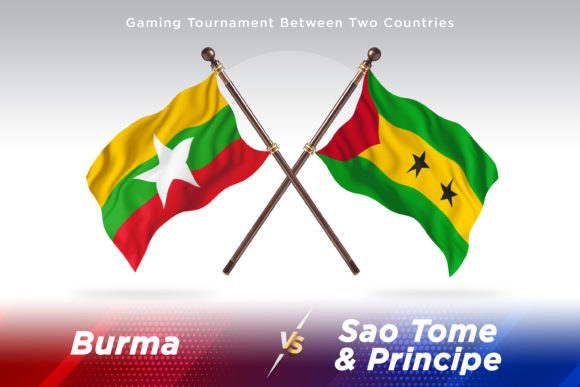
At first glance, both flags use horizontal stripes and include stars. The current flag of Myanmar, adopted in 2010, features three horizontal stripes of yellow, green, and red with a large white five-pointed star in the center. The flag of Sao Tome and Principe, adopted in 1975, has three horizontal stripes as well: green at the top and bottom and yellow in the middle, with a red triangle on the hoist side and two black five-pointed stars in the yellow stripe. The similarities end there, but many people remember only the vague impression of stripes and stars, which is where the trouble begins. People interested in this comparison are usually looking to avoid misidentification in design projects, educational content, or international contexts. Others are simply curious about world flags and want to sharpen their knowledge. Either way, the goal is clarity, not guesswork.
Common Mistake Number One: Assuming One Star Means Burma
A white star in the center of a flag sounds distinctive, but it is not unique. The Myanmar flag has one large white star. Sao Tome and Principe has two black stars. Yet many learners and even some professionals remember only the star and forget the number and color. If you grab an image of a flag with a single star and assume it must be Burma, you could be wrong. Several other flags also feature a single star. What you need to check is the stripe order and the star's placement. In the Myanmar flag, the star sits directly in the center of the middle green stripe and overlaps slightly into the yellow and red stripes. In Sao Tome and Principe, the two stars sit side by side in the yellow stripe, closer to the hoist side. If you see only one star, look again. Count the stars. Note the color. Then decide.
How to Avoid This Mistake
When you are sourcing flag images for a website, a classroom presentation, or a print project, always verify the number of stars against a reliable source. Do not rely on memory alone. Bookmark a trustworthy flag database like the CIA World Factbook or an official government site. Compare side by side before you finalize your file. If you are teaching or writing about flags, make it a habit to mention the star count early. That small detail prevents a cascade of errors downstream.
Common Mistake Number Two: Ignoring the Triangle on Sao Tome and Principe
The red triangle on the hoist side of the Sao Tome and Principe flag is a major visual cue, but it is surprisingly easy to overlook, especially if you are looking at a cropped image or a small thumbnail. Many people focus on the horizontal stripes and the stars and forget to check for additional shapes. The Myanmar flag has no triangle. It is a straightforward rectangle with three stripes and a centered star. If you see a triangle on the left, you are looking at Sao Tome and Principe, not Burma. This oversight is especially common in digital design where flags are scaled down for icons or favicons. The triangle becomes less obvious, and the two flags begin to look similar in miniature.
Practical Advice for Designers and Content Creators
If you work with flags in user interfaces, apps, or infographics, always use the full-width version of the flag for initial identification. Do not rely on cropped or square-cropped versions that might remove the hoist side. When you need a thumbnail, include the triangle or verify the star color. A simple rule: red triangle means two stars and Sao Tome. No triangle, one star, and that is Myanmar. Write this rule into your style guide if you produce flag content regularly.
Common Mistake Number Three: Using the Wrong Color Palette
Both flags use green, yellow, and red, but the shades are not identical. The Myanmar flag uses a bright yellow, a medium green, and a rich red. The Sao Tome and Principe flag uses a deeper, forest-like green, a golden yellow, and a red that is slightly darker than Myanmar's red. If you are producing printed materials or digital assets, using the wrong shade can make your work look sloppy or unprofessional. More importantly, it can confuse viewers who are familiar with the correct colors. Color accuracy matters for respect and recognition. Flags are national symbols. Getting the color wrong is like mispronouncing someone's name repeatedly.
Better Approach for Accurate Colors
Whenever you download a flag image, check the color values against official specifications. Many government websites provide RGB, CMYK, or Hex codes. If you cannot find the official specs, use a high-resolution image from a reputable source and sample the colors using a color picker tool. Do not guess based on what looks right on your monitor. Monitors vary widely. Test your colors on at least two different screens before finalizing your project. If you are printing, request a proof to confirm the hues.
Common Mistake Number Four: Confusing the Old Burmese Flag with the Current One
Burma changed its flag in 2010. The old flag had a blue canton with a white emblem and red field, nothing like the current horizontal stripes. People who remember the old flag or learned it years ago might think they already know the Burma flag, but the design was completely replaced. If you are comparing historical flags or referencing older materials, you could mistakenly present the old flag as the current one. This is especially problematic in news articles, educational resources, or travel guides that should reflect the present-day symbol.
How to Stay Current
Always check the year of adoption for any flag you are using. If your source material is more than 15 years old, verify that the flag has not changed. For Myanmar, the current flag has been in use since October 2010. For Sao Tome and Principe, the flag has remained consistent since independence in 1975, so there is less risk of confusion there. But never assume a flag is static. Countries update their symbols periodically. A quick lookup takes two minutes and saves you from presenting outdated information.
What to Check Before You Use Either Flag in Your Work
Before you insert a flag into a document, a website, a video, or a product, run through this quick checklist. First, confirm the country name matches the flag. If you are writing about Myanmar, use the current flag only. Second, verify the number and color of stars. One white star means Myanmar. Two black stars plus a red triangle means Sao Tome and Principe. Third, check the stripe order. Myanmar is yellow, green, red from top to bottom. Sao Tome and Principe is green, yellow, green with the triangle on the left. Fourth, confirm the colors are accurate to official specs. Fifth, ensure you are not using an old version of the flag. This checklist is simple but catches almost every common mistake. Make it part of your workflow.
Realistic Example of the Confusion in Practice
A freelance designer was hired to create a world map infographic for a school. She needed flags for every country. She downloaded a set of flag icons from a free resource. The Myanmar icon showed a single white star on horizontal stripes. The Sao Tome and Principe icon showed two black stars on horizontal stripes with a red triangle. But the file names were swapped. Because she did not verify the visual details against the country names, the infographic showed the wrong flags for both countries. The teacher who ordered the work caught the error during review. It cost time and trust to fix. If the designer had used the checklist above, she would have spotted the mismatch in two minutes. A small verification step prevents a big redo.
Better Ways to Learn and Compare These Flags
If you are a student, teacher, or hobbyist trying to remember the differences, use simple memory aids. Think of Myanmar as one country and one star. One and one. Think of Sao Tome and Principe as two islands and two stars. Two and two. The red triangle on Sao Tome and Principe resembles a piece of the flag that was cut and shifted to the left, which you can picture as the country's unique shape. You can also practice with flag flashcards that show the image without the country name. Test yourself daily for a week. You will rarely confuse them again. For professionals who encounter flags regularly, create a personal reference sheet with side-by-side comparisons of commonly confused flags. Keep it pinned to your desk or saved in your design folder.
The Bigger Picture: Why Getting It Right Matters
Flags are more than graphics. They represent national identity, history, and pride. Using the wrong flag in a publication, a presentation, or a product can offend people or make your work appear careless. In educational settings, it spreads misinformation. In branding or marketing, it undermines credibility. Taking a few extra minutes to verify flag details is a small investment that protects your reputation and shows respect for the countries you are referencing. The Burma versus Sao Tome and Principe flag comparison is just one example of a common mix-up, but the habits you build for handling it correctly will serve you across all flag-related tasks. Count the stars, note the triangle, check the colors, confirm the year, and you will never go wrong.