Burma Versus Kashmir: Two Flags, Two Struggles – Understanding the Stories Behind the Symbols
Flags are more than pieces of cloth. They carry the weight of history, the hopes of millions, and often the scars of unresolved conflict. At first glance, comparing "Burma" and "Kashmir" through their flags might seem unusual—one is a sovereign nation in Southeast Asia, the other a disputed territory in the Himalayas. Yet both flags tell powerful stories about identity, struggle, and the search for peace. In this article, we’ll explore the symbolism, history, and contemporary relevance of the flags of Burma (now officially Myanmar) and Kashmir, and what they reveal about two regions that continue to shape global conversations around self-determination, diversity, and conflict.
The Flag of Burma (Myanmar): A Symbol of Union and Sacrifice
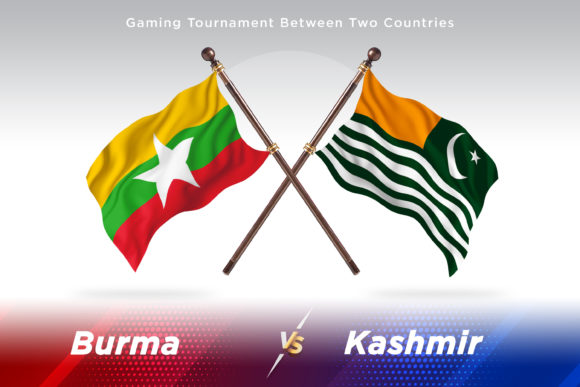
The current flag of Myanmar was adopted on October 21, 2010, replacing the socialist-era flag that had been in use since 1974. It consists of three horizontal stripes of yellow, green, and red, with a large white five-pointed star in the center. To understand this flag, you need to understand Burma’s long journey from colonial rule to independence, and from military dictatorship to a fragile democratic transition—and back again.
What the Colors and Star Represent
- Yellow symbolizes solidarity and the unity of all ethnic groups within the union. Burma is home to over 135 officially recognized ethnic groups, and this color speaks to the ideal of harmony among them.
- Green represents peace, tranquility, and the lush natural landscape of the country.
- Red stands for courage and the blood shed by those who fought for independence and national sovereignty.
- The white star is perhaps the most important element. It signifies the perpetual existence of the union and the hope for a bright, unified future. The five points of the star are sometimes interpreted as representing the five main pillars of the state: agriculture, industry, transportation, education, and healthcare.
The flag was chosen after a constitutional referendum in 2008, during the military junta’s "Roadmap to Discipline-Flourishing Democracy." Critics argue it was imposed without genuine public consultation, but supporters see it as a fresh start after decades of isolation and authoritarian rule. Either way, the flag now flies over a nation still grappling with civil war, ethnic persecution—most notably against the Rohingya—and a fragile democratic experiment that was cut short by a military coup in February 2021.
The Flag and Burma’s Ongoing Struggles
Today, the flag of Myanmar is itself a contested symbol. For the military junta, it represents "discipline-flourishing democracy" and national unity. For the pro-democracy movement, the opposition National Unity Government, and many ethnic armed organizations, the flag may evoke a state that has failed to protect its citizens. Some groups prefer to fly the pre-2010 flag—which featured a red field with a blue canton containing a cogwheel and rice stalks—as a symbol of the revolutionary socialist past or of resistance to the current regime.
This tension between official symbolism and lived reality is a key theme when we compare Burma to Kashmir. Both regions have flags that are meant to project unity, but the people they represent remain deeply divided.
The Flags of Kashmir: Multiple Symbols for a Divided Region
Unlike Burma, Kashmir does not have a single, universally accepted flag. Instead, there are two primary flags that represent different political entities and aspirations. To understand them, you need to understand the Kashmir conflict itself—a dispute that has simmered since the partition of India in 1947.
The State Flag of Jammu and Kashmir (1936–2019)
From 1936 until 2019, the princely state of Jammu and Kashmir—and later the Indian state of Jammu and Kashmir—had its own state flag. It featured a red field with a white plough in the center. The red background symbolized courage and sacrifice, while the plough represented the agrarian economy and the dignity of labor. The flag was a source of pride for many Kashmiris and was flown alongside the Indian national flag.
However, in August 2019, the Indian government under Prime Minister Narendra Modi abrogated Article 370 of the Indian Constitution, which granted special autonomy to Jammu and Kashmir. This led to the removal of the state flag as a separate entity. Today, only the Indian national flag officially flies over the union territory of Jammu and Kashmir. For many Kashmiris, the removal of the state flag is a painful symbol of lost identity and autonomy.
The Flag of Azad Kashmir
On the other side of the Line of Control, the Pakistani-administered region known as Azad Jammu and Kashmir (AJK) has its own flag: a green field with a vertical white stripe at the hoist, and a white crescent and five-pointed star in the center. The green represents Islam, the white represents the planned peace and prosperity of the region, and the crescent and star are classic symbols of Islamic sovereignty. This flag is flown alongside the Pakistani national flag and represents the aspiration of many Kashmiris for self-determination.
The existence of two flags—one red with a plough, now effectively retired, and one green with a crescent and star—mirrors the divided reality of Kashmir itself.
Burma and Kashmir: A Comparative Look at Two Troubled Regions
At first glance, Burma and Kashmir seem worlds apart. Burma is a Southeast Asian nation of over 54 million people, while Kashmir is a mountainous region of about 18 million spread across the India-Pakistan border. But when you compare them through the lens of their flags, striking parallels emerge.
Colonial Legacy and Partition
Both Burma and Kashmir were deeply affected by British colonial rule. Burma was administered as a province of British India until 1937, then became a separate colony, and gained independence in 1948. Kashmir, as a princely state, was given a choice to join India or Pakistan at partition—a choice that led to war, division, and ongoing hostility.
In both cases, the colonial legacy left behind borders that did not reflect ethnic or cultural realities. Burma inherited a multi-ethnic state that has been plagued by civil war ever since. Kashmir inherited a divided territory with no end to the dispute in sight.
Ethnic and Religious Diversity
Burma is one of the most ethnically diverse countries in Asia, with the Bamar majority dominating the central plains and numerous ethnic minorities—Shan, Karen, Kachin, Chin, Rohingya, and others—living in the borderlands. The flag’s yellow stripe is meant to represent the unity of these groups, but in practice, ethnic conflict has been a constant feature of Burmese life.
Kashmir, too, is diverse in its own way: a Muslim-majority population with significant Hindu and Buddhist minorities, and a complex mix of languages and cultures. Both regions struggle with the question: How do you build a unified national identity when your people are deeply divided by ethnicity, religion, and historical grievance?
Struggles for Self-Determination
Perhaps the most profound parallel is the struggle for self-determination. In Burma, ethnic minorities have been fighting for autonomy, federalism, and even independence for decades. In Kashmir, the local population has sought either independence or the right to choose their own political future—a demand that remains unmet.
Both flags, in different ways, represent the hope for a future where people can govern themselves in peace and dignity. And both flags are also reminders of how far that hope remains from reality.
Why Flags Matter: Understanding Identity and Aspiration
Some readers may wonder: Why spend so much time on flags? Aren’t they just symbols? The answer is that symbols matter because they shape how people see themselves and their place in the world. When a flag is flown, it communicates belonging. When it is banned or removed, it communicates exclusion.
In Burma, the flag is a daily presence in schools, government buildings, and military parades. But for many ethnic minorities, the national flag may feel like a symbol of a state that does not represent them. Similarly, in Kashmir, the removal of the state flag in 2019 was experienced by many as an erasure of identity.
Flags are also used in protest. In Myanmar’s 2021 Spring Revolution, protesters wave the old 1974 flag as a symbol of resistance to the military coup. In Kashmir, the red plough flag still appears in protests, even though it is no longer official. These acts show that people use flags to tell their own stories—stories that often differ from the official narrative.
Practical Relevance: What We Can Learn from These Two Flags
- Conflict resolution: The stories of Burma and Kashmir remind us that durable peace requires more than ceasefires—it requires acknowledging the identities and aspirations of all groups. Flags can be a starting point for dialogue.
- Cultural understanding: For travelers, journalists, or anyone engaging with these regions, understanding flag symbolism helps you read the political and emotional landscape more accurately.
- Identity politics: In an era of rising nationalism and ethnic tension worldwide, the flags of Burma and Kashmir offer case studies in how symbols can both unite and divide.
- Historical awareness: Both flags carry the legacy of colonialism and partition. They remind us that history is not just in the past—it is woven into the fabric of everyday life.
Conclusion: Two Flags, One Shared Human Story
Comparing Burma versus Kashmir through their flags is not about ranking tragedies or oversimplifying complex histories. It is about recognizing that, across borders and cultures, people use symbols to express the same basic human needs: the need for identity, for recognition, for autonomy, and for peace. The yellow, green, and red of Myanmar’s flag, and the red plough or the green crescent of Kashmir’s flags—each carries a dream that has not yet been fully realized.
As global citizens, understanding these symbols helps us see the world more clearly. It helps us move beyond headlines and stereotypes and connect with the lived experiences of people who are often far away but whose struggles are deeply familiar. So the next time you see the flag of Myanmar or the flag of Kashmir, you will know that you are looking not just at a design, but at a story—one that continues to unfold every day.