Brunei Versus Samoa Two Flags: A Study in Symbolism and National Identity
When you place the national flags of Brunei and Samoa side by side, the visual contrast is immediate. One draws on deep Islamic heritage and monarchical tradition, the other on Pacific Island navigation and Christian symbolism. Yet both flags tell compelling stories about national identity, resilience, and the values that shape their people. Understanding the Brunei versus Samoa two flags comparison offers more than design curiosity—it reveals how nations encode their histories, beliefs, and aspirations into cloth and colour. For travelers, creatives, marketers, and culturally curious readers, this comparison opens a window into two distinct worlds and the principles that define them.
Why Flags Matter in a Globalised World
Flags remain among the most potent symbols of national identity. In an era of digital connection and cross-border collaboration, flags appear everywhere—on passports, brand campaigns, event branding, travel content, and social media. They signal heritage, values, and belonging. For professionals working in international contexts, understanding what a flag represents goes beyond trivia. It builds cultural competence, informs respectful design choices, and enriches storytelling. The Brunei versus Samoa two flags comparison is especially relevant because it highlights how geography, religion, and history produce vastly different visual languages, even among smaller nations with global reach.
For example, a content creator producing travel material about Southeast Asia and the Pacific might incorporate flag imagery. Knowing the symbolism behind each design ensures accurate representation. A business owner looking to collaborate with partners in Brunei or Samoa benefits from understanding the cultural weight these symbols carry. Flags are not decorative—they are compressed narratives.
Brunei's Flag: Majesty, Faith, and Stability
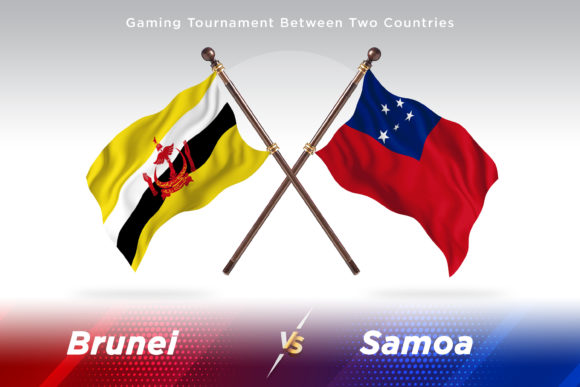
Brunei’s flag features a yellow field bisected by black and white diagonal stripes. At the centre sits the national emblem—a crescent, a parasol, two hands, and flags—all in red. Yellow in Southeast Asian heraldry traditionally represents royalty, and in Brunei it symbolises the Sultan, who holds both political and spiritual authority. The black and white stripes represent Brunei’s chief ministers, while the emblem’s crescent signifies Islam, the state religion. The parasol stands for monarchy, the hands suggest the government’s duty to protect the people, and the small flags reference the nation’s sovereignty.
This design is deliberate and layered. Every element reinforces the centrality of the Sultan, the importance of Islam, and the stability of the state. The flag has remained largely unchanged since Brunei gained full independence in 1984, reflecting a nation that values continuity. For anyone comparing Brunei versus Samoa two flags, Brunei’s design communicates hierarchy, tradition, and religious foundation.
Samoa's Flag: Faith, Navigation, and Freedom
Samoa’s flag is equally purposeful but visually and symbolically distinct. A red background represents courage and the blood of those who fought for independence. In the upper hoist quadrant sits a dark blue canton—blue symbolising freedom and the Pacific Ocean—bearing five white stars. Those stars represent the Southern Cross constellation, a crucial navigational guide for Pacific Islanders and a symbol of Christian faith, which is central to Samoan identity. The stars also allude to the nation’s motto, “Faavae i le Atua Samoa” (Samoa is founded on God).
The flag was adopted in 1949, before independence in 1962, making it one of the older flag designs among Pacific nations. Its simplicity is intentional: it speaks to navigation, faith, and the natural environment. Unlike Brunei’s emblem-heavy composition, Samoa’s flag relies on colour and celestial symbolism. The contrast between Brunei versus Samoa two flags illustrates how different cultural priorities—monarchy and religion versus faith and navigation—produce distinct design philosophies.
How Symbolism Reflects National Priorities
Comparing the Brunei versus Samoa two flags reveals more than aesthetic preference. It exposes what each nation values most. Brunei’s flag centres on the ruler and the religion. Samoa’s flag centres on the ocean and divine guidance. Both are honest representations of what citizens hold dear.
For professionals and educators, this comparison is a useful case study in visual communication. A designer might ask: How do you encode hierarchy in a flag? How do you convey openness and exploration? The answers lie in these two examples. Brunei uses diagonal stripes and a central emblem to create a sense of order. Samoa uses a canton and constellation to evoke movement and hope. When teaching or creating content about national identity, comparing these two flags provides concrete examples of how symbols function.
Current Trends and Shifting Perspectives on National Symbols
In recent years, flags have become part of larger conversations about identity, decolonisation, and representation. Citizens and diaspora communities often reexamine what national symbols mean in a modern context. For Brunei, the flag remains relatively uncontroversial—it is closely tied to the monarchy and Islamic values that the majority population supports. For Samoa, the flag enjoys broad affection, though discussions sometimes arise about whether Pacific Island symbols adequately reflect indigenous traditions as distinct from colonial influences.
Yet both flags have found new relevance in the digital age. Emoji flags, flag pins on social media profiles, and flag-based merchandise all keep these symbols visible. Travel bloggers use flags to tag content, businesses use them in partnership announcements, and educators use them in geography lessons. The Brunei versus Samoa two flags comparison is especially useful for those creating content about Southeast Asia and the Pacific, where audiences may be unfamiliar with the nuances of each nation’s identity. Including accurate, respectful flag representation signals professionalism and cultural awareness.
Practical Implications for Creators and Professionals
Understanding the Brunei versus Samoa two flags has tangible benefits across several fields:
- Content creation and travel media: Bloggers, YouTubers, and Instagram creators covering Brunei or Samoa can use flag imagery to establish location context. Knowing the symbolism helps avoid misrepresentation—for instance, not cropping the emblem from Brunei’s flag or rearranging the stars on Samoa’s.
- Branding and marketing: Businesses launching products or campaigns in these markets should understand local symbolism. Using a flag incorrectly can offend. Conversely, referencing flag elements thoughtfully (like Samoa’s Southern Cross in a travel campaign) can resonate deeply.
- Education and training: Teachers, corporate trainers, and cross-cultural consultants can use the Brunei versus Samoa two flags comparison as a quick, memorable lesson in how culture shapes visual identity. It works well in diversity and inclusion workshops or international business courses.
- Design and creative direction: Graphic designers and illustrators seeking inspiration for emblematic or symbolic projects can study both flags. Brunei’s emblem demonstrates how to pack meaning into a small space. Samoa’s flag shows how to achieve impact with minimal elements.
- Personal curiosity and travel planning: Even for the casual reader or traveller, understanding the flags enriches the experience of visiting either country. Recognising the flag in a local context—on a building, currency, or official document—deepens appreciation.
Observing the Evolution of Flag Usage
People are paying more attention to flags today than perhaps at any point in recent decades. Global events, from international sporting competitions to political movements, keep flags in public view. Simultaneously, the rise of digital representation means flags appear in contexts where they never did before: Zoom backgrounds, NFT collections, streaming profiles, and virtual events.
For Brunei and Samoa, this visibility offers opportunities. Tourism boards, cultural institutes, and diaspora communities can leverage flag recognition to tell richer stories. A simple visual comparison—like the Brunei versus Samoa two flags—can spark curiosity about the nations themselves. Why is one flag yellow and the other red? Why does one have an emblem and the other stars? Those questions lead to deeper engagement with history, geography, and culture.
At the same time, flag usage demands care. Digital reproduction can distort colours or crop symbols. Creators should verify official flag specifications before using them in any project. Both Brunei and Samoa have precise standards for their flags, and respecting those standards shows good faith.
Practical Recommendations for Engaging with These Flags
- Learn the official specifications. Before using either flag in a design, presentation, or publication, check the exact colours, proportions, and emblem placement. Colour variations are common online, and accuracy matters.
- Understand the context. Brunei’s flag is deeply tied to the Sultan and Islam. Samoa’s flag is tied to Christianity and navigation. Referencing these connections in content adds depth and avoids superficial treatment.
- Use flags to bridge understanding. When teaching or writing about cultural differences, the Brunei versus Samoa two flags comparison is a low-stakes, high-interest entry point. It invites questions without being politically charged.
- Respect the flag in its home country. If you visit Brunei or Samoa, observe local flag etiquette. In Brunei, the flag flies on government buildings and during royal events. In Samoa, it is displayed with pride at public gatherings and churches. Following local norms shows respect.
- Incorporate flag symbolism into creative work thoughtfully. For designers and marketers, subtle references—like using Samoa’s star alignment or Brunei’s diagonal stripe pattern—can evoke the nation without direct reproduction. This approach works well in branding and illustration.
Why This Comparison Matters Now
In a time when global audiences are more connected yet more aware of cultural distinctiveness, comparing symbols like the Brunei versus Samoa two flags helps people navigate difference with nuance. For professionals, creators, and educators, the ability to read and explain symbols is a practical skill. It supports better communication, more respectful design, and richer storytelling.
Both nations have unique stories, and their flags are the most concise versions of those stories. Brunei’s flag is a statement of continuity, faith, and monarchy. Samoa’s flag is a statement of navigation, faith, and independence. Held side by side, they demonstrate that national identity can be expressed with equal power through elaborate or minimal design. The key is not the complexity of the symbol, but the honesty of the story behind it.
For anyone creating content, building brands, teaching audiences, or simply satisfying curiosity, the Brunei versus Samoa two flags comparison offers a grounded, visually clear example of how nations represent themselves. It reminds us that symbols matter—and that understanding them is a small but meaningful step toward genuine cultural literacy.