Brunei Versus Rwanda: Two Flags, Two Nations, and the Stories They Tell
Flags are far more than colourful pieces of fabric fluttering on flagpoles. They are visual shorthand for a nation's history, values, and aspirations. When we place the flag of Brunei side by side with the flag of Rwanda, we are looking at two vastly different worlds. One represents a wealthy, traditional Malay sultanate on the island of Borneo; the other represents a resilient East African nation that has rebuilt itself after tragedy. Understanding the Brunei versus Rwanda flag comparison helps us appreciate how national symbols evolve and what they reveal about a country's identity. In this article, we will examine each flag in detail, explore their symbolism, compare their designs, and discuss the broader cultural and historical contexts that shaped them.
Why Compare Brunei and Rwanda?
At first glance, Brunei and Rwanda seem to have little in common. Brunei is a small, oil-rich sultanate in Southeast Asia with a population of under half a million. Rwanda is a landlocked country in East Africa with a population of over thirteen million and a history marked by colonial division and genocide. Yet both nations have created flags that speak powerfully to their national identity. A Brunei versus Rwanda flag analysis reveals how two very different countries use colour, symbolism, and design to tell their unique stories. For anyone interested in vexillology (the study of flags), this comparison is both fascinating and instructive.
Design and Colours
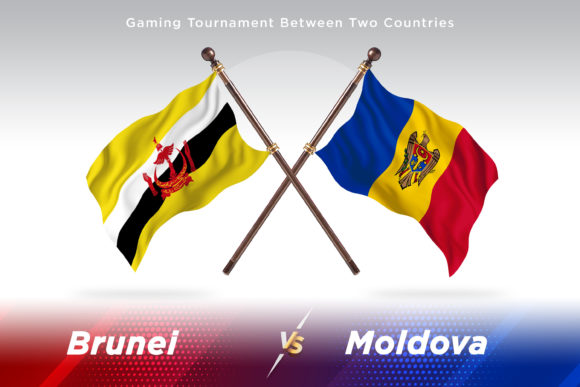
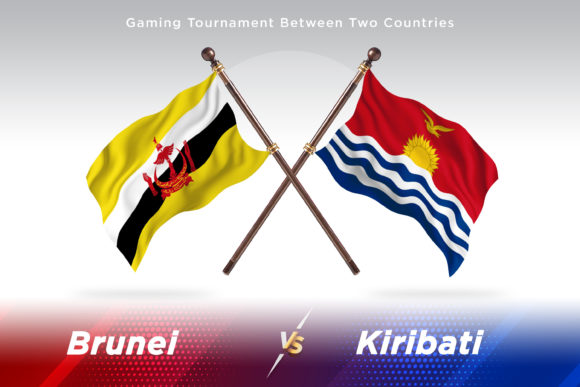
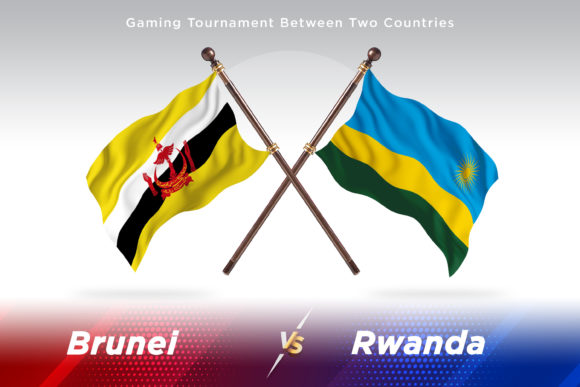
The flag of Brunei consists of a yellow field with two diagonal black and white stripes running from the top left to the bottom right. At the centre, the red state crest is prominently displayed. Yellow is the traditional colour of royalty in Southeast Asia, and in Brunei it symbolises the Sultan, who is both the head of state and the head of the Islamic faith. The black and white diagonal stripes represent two of the country's most important ministers: the Pengiran Bendahara (the First Minister) and the Pengiran Pemancha (the Second Minister). This design has remained largely unchanged since 1906, though the crest was slightly modified in 1959.
The Crest: A Rich Layer of Meaning
The crest in the centre of the flag is a detailed emblem that contains multiple elements. It features a crescent moon, which is a clear symbol of Islam, the state religion. Inside the crescent are Arabic inscriptions that translate to "Always in service with God's guidance" and "Brunei Darussalam" (Brunei, the Abode of Peace). Below the crescent is a parasol or royal umbrella, a traditional symbol of monarchy in Southeast Asia. The crest is supported by two upraised hands, which represent the government's duty to protect the people and uphold justice. Every element of the Brunei flag reinforces the centrality of the Sultan, the importance of Islam, and the continuity of Malay tradition.
Historical Context
Brunei was once a powerful maritime empire controlling much of Borneo and parts of the Philippines. By the 19th century, it had declined significantly and became a British protectorate. The flag was first adopted during this protectorate period, and it has remained a constant symbol of Bruneian identity. The flag's design is deliberately traditional, reflecting the nation's commitment to preserving its monarchy and Islamic values even as it modernises. Today, Brunei is one of the few remaining absolute monarchies in the world, and its flag proudly proclaims that continuity.
Design and Colours
The flag of Rwanda is strikingly modern. It consists of three horizontal bands: a light blue band at the top, followed by a yellow band, and then a green band. In the upper right-hand corner (the fly side of the top blue band), there is a golden sun with 24 rays. The current flag was adopted on 25 October 2001, replacing an older flag that carried painful associations for many Rwandans. The new flag was designed as part of a broader national healing process after the 1994 genocide against the Tutsi.
Symbolism of the Rwandan Flag
Every colour in the Rwandan flag has a deliberate meaning. The light blue represents peace and happiness, which is especially poignant given the country's history of conflict. The yellow symbolises economic development and the nation's bright future. The green stands for prosperity, hope, and the country's abundant natural resources. The golden sun with 24 rays represents enlightenment, unity, transparency, and the fight against ignorance. Unlike many African flags that use red, black, and green to represent pan-Africanism or liberation struggles, Rwanda chose colours that look forward rather than backward.
A Deliberate Break from the Past
The previous Rwandan flag, in use from 1961 to 2001, featured the colours red, yellow, and green with a large black "R" in the centre. That flag was closely associated with the Hutu-led government that orchestrated the genocide. After the genocide, the new government under the Rwandan Patriotic Front (RPF) sought to create symbols of national unity that would be acceptable to all Rwandans, regardless of ethnicity. The 2001 flag was the result of a national competition and widespread consultation. It was designed to be inclusive, peaceful, and forward-looking. This is a powerful example of how a flag can be part of a nation's healing process.
Colour Palette
The most obvious difference between the two flags is their colour scheme. Brunei uses yellow, black, white, and red. Rwanda uses blue, yellow, green, and gold. Where Brunei's yellow is a statement of monarchy, Rwanda's blue is a statement of peace. The contrast could hardly be starker. Brunei's colours are warm and traditional; Rwanda's are cool and optimistic. Interestingly, both flags use yellow, but for entirely different reasons: Brunei uses it for royalty, while Rwanda uses it for economic development.
Layout and Structure
Brunei's flag uses a diagonal design, which is relatively rare among national flags. The stripes cut across the field in a dynamic way, creating a sense of movement. Rwanda's flag uses a simple horizontal tricolour, which is one of the most common flag layouts in the world. The horizontal bands are calm and orderly, conveying stability. Adding the sun in the upper corner gives the Rwandan flag a distinctive focal point without disrupting the overall balance. Brunei, by contrast, places its emblem squarely in the centre, making the flag symmetrical and formal.
Emblems and Symbols
Brunei's flag features a detailed crest with religious and royal symbolism. Rwanda's flag uses a sun, which is a more universal and inclusive symbol. The sun is also a common symbol in African flags, representing hope and a new dawn. For Rwanda, the sun has the specific meaning of enlightenment and unity. Brunei's crest, on the other hand, is explicitly Islamic and monarchical. It is not a symbol that invites universal identification; it is a symbol of a specific ruling system. This difference reflects the nations' different political and social structures: Brunei is a monarchy that emphasises hierarchy and tradition, while Rwanda is a republic that emphasises unity and progress.
Brunei: Tradition and Stability
The Brunei flag is deeply conservative. It has remained unchanged for over a century, which is unusual in a world where flags are often redesigned after revolutions or changes of government. This stability reflects Brunei's political reality: the same royal family has ruled for over 600 years, and the country has avoided the colonial-era border conflicts and post-independence turmoil that have affected many of its neighbours. The flag is a statement of continuity. It says, "We are who we have always been." In a rapidly changing world, that message carries weight.
Rwanda: Healing and Ambition
The Rwanda flag is the opposite: it is a deliberate break with the past. It says, "We are not who we used to be." The flag is part of a broader nation-building project that includes reconciliation programmes, economic modernisation, and a focus on technology and gender equality. Rwanda has made remarkable progress since 1994, and the flag is a visible symbol of that transformation. When Rwandans see their flag, they are reminded of peace, unity, and the future rather than division and violence. This makes the flag not just a national emblem but a tool for healing.
Practical Relevance in Modern Life
Understanding flags like those of Brunei and Rwanda is not just an academic exercise. For travellers, businesspeople, and students, knowing what a flag represents can deepen cultural awareness and avoid misunderstandings. For example, flying the Rwandan flag incorrectly or misrepresenting its symbolism could be seen as insensitive given the country's history. Similarly, understanding that the Brunei flag is closely tied to the Sultan and Islam helps visitors appreciate the country's customs and etiquette.
In business, flags are often used as shorthand for a country's political stability, economic priorities, and cultural values. A company looking to invest in Rwanda might see the flag's emphasis on peace and development as a positive sign. A company trading with Brunei would recognise the flag's royal symbolism as a reminder of the importance of hierarchy and respect in Bruneian business culture. In an increasingly globalised world, these small signals matter.
Common Misunderstandings Cleared Up
One common mistake is to assume that the diagonal stripes on the Brunei flag represent rivers or geographical features. They do not; they represent ministers. Another is to think that the Rwandan flag's sun is the same as the sun on other African flags, such as that of Malawi or Namibia. While there are similarities, Rwanda's specific 24-ray sun was designed to represent the 24 hours of the day, symbolising continuous progress and vigilance. It is also worth noting that the Rwandan flag is sometimes confused with the flag of Kyrgyzstan because of the sun motif, but Kyrgyzstan's flag has a red field and a very different sun design.
Another misunderstanding is that the Brunei flag is solely Islamic in its symbolism. While Islam is central, the flag also incorporates traditional Malay monarchical symbols that predate the arrival of Islam in the region. The parasol, for instance, is a pre-Islamic symbol of kingship in many Southeast Asian cultures. The flag is a blend of Islamic and indigenous traditions.
Broader Lessons from the Comparison
The Brunei versus Rwanda flag comparison teaches us that flags are never just decorative. They are political statements, historical documents, and cultural artefacts. Brunei's flag tells a story of continuity, monarchy, and faith. Rwanda's flag tells a story of rupture, healing, and hope. Both are valid expressions of national identity, and both help us understand the countries they represent.
For readers interested in vexillology, this comparison also shows how flags can be analysed along multiple dimensions: colour, layout, symbolism, and historical context. A flag that seems simple at first glance often reveals layers of meaning upon closer inspection. This is true of the Brunei flag with its intricate crest and of the Rwandan flag with its carefully chosen colours and sun.
Conclusion
In the end, comparing Brunei and Rwanda through their flags is a reminder that every nation has a story to tell. Brunei's story is one of tradition, wealth, and the enduring power of monarchy. Rwanda's story is one of tragedy, resilience, and the determination to build a better future. Both flags are beautiful in their own right, but they become even more meaningful when we understand the worlds they represent. Whether you are a student, a traveller, or simply someone curious about the world, taking the time to study flags like these enriches your understanding of global diversity and the many ways people choose to represent themselves.
The next time you see the yellow, black, and white of Brunei or the blue, yellow, and green of Rwanda, you will know that you are looking at more than just fabric and colour. You are looking at history, identity, and hope.