Brunei Versus Cambodia Two Flags: Symbols of Heritage and Identity
What Makes National Flags More Than Just Cloth
Flags tell stories. They condense centuries of history, culture, and national pride into a single design. When you look at the flags of Brunei and Cambodia side by side, you are seeing two distinct narratives unfold through color, symbolism, and arrangement. Understanding these differences goes beyond simple comparison—it opens a window into how nations choose to represent themselves to the world.
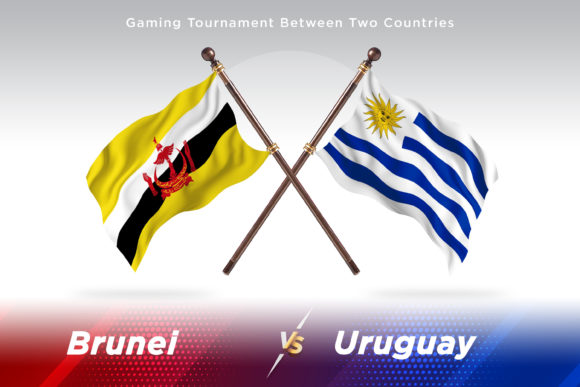
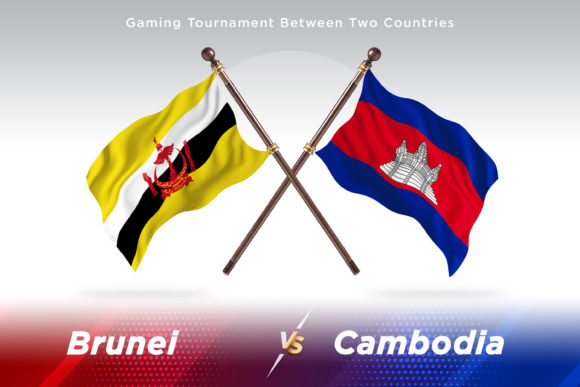
Brunei's flag features a yellow field crossed by diagonal black and white stripes, with the national crest centered in red. Cambodia's flag, meanwhile, uses horizontal bands of blue and red with a white depiction of Angkor Wat at its center. These are not arbitrary choices. Every element carries weight, from the yellow that symbolizes the sultan in Brunei to the temple representing Cambodia's glorious Khmer Empire.
What Brunei's Flag Communicates
The yellow background of Brunei's flag is a royal color in Southeast Asia, specifically representing the Sultan of Brunei. The black and white diagonal stripes run from the upper hoist to the lower fly, and they represent Brunei's chief ministers. At the center, the national crest includes a crescent moon symbolizing Islam, a parasol representing royalty, and two upturned hands that signify the government's duty to protect the people. The crest also bears the Arabic phrase "Always in service with God's guidance."
This flag was adopted in 1959, though Brunei did not gain full independence from Britain until 1984. The design reflects a nation deeply rooted in Islamic monarchy, with the sultan holding both political and religious authority. For anyone studying Southeast Asian governance or monarchy systems, Brunei's flag offers immediate visual clues about how power and faith intersect in this small but wealthy nation.
What Cambodia's Flag Reveals
Cambodia's current flag, readopted in 1993 after the restoration of the monarchy, uses three horizontal bands. The outer bands are blue, representing the monarchy and the nation's freedom. The inner red band represents the nation and the courage of its people. At the heart of the flag sits Angkor Wat in white, a symbol of Cambodia's cultural heritage, national pride, and enduring identity.
Angkor Wat is not a random landmark choice. It appears on Cambodia's flag because it represents the heights of Khmer civilization and remains a source of profound national pride. The flag has changed multiple times throughout Cambodia's turbulent modern history, reflecting shifts in government from monarchy to communist rule and back again. The return to this design signals continuity with pre-conflict Cambodia and a deliberate embrace of heritage over revolutionary symbolism.
For Travelers and Cultural Enthusiasts
If you plan to visit either country, understanding the flag deepens your appreciation for local customs and national sentiment. In Brunei, the flag appears prominently during Sultan Hassanal Bolkiah's birthday celebrations and National Day on February 23. In Cambodia, the flag flies during Independence Day on November 9 and the Water Festival in November. Knowing what these symbols mean helps you engage more respectfully with locals and understand public ceremonies you might witness.
A traveler noticing the crescent on Brunei's flag immediately understands the importance of Islamic practices in daily life, such as prayer times and dress codes. A visitor to Cambodia seeing Angkor Wat on the flag gains insight into how deeply Cambodians value their ancient heritage, even amid modern challenges.
For Educators and Students
Teachers covering Southeast Asian geography or world history can use these two flags as case studies in how nations communicate their values. Brunei versus Cambodia two flags offer contrasting examples: one representing a small, resource-rich monarchy with a single dominant religion, and the other representing a larger, recovering nation with a Buddhist majority and a complex modern history. Students can analyze how color choice, symbols, and flag proportions reflect different forms of government, religious influence, and historical priorities.
A classroom exercise might involve asking students to predict what each flag looks like based solely on descriptions of each country's history and governance, then comparing their guesses with reality. This approach teaches critical thinking about visual communication and national branding.
For Designers and Creative Professionals
Flag design principles—simplicity, meaningful symbolism, limited colors, and distinctiveness—apply directly to logo creation, branding, and visual identity work. Brunei's flag uses four colors and a complex crest, while Cambodia's uses three colors and a bold, recognizable silhouette. Both are effective but through different design strategies.
If you are a graphic designer working on a project involving Southeast Asian themes, understanding why these flags work visually helps you create culturally informed work. The symmetry of Cambodia's flag and the diagonal energy of Brunei's offer contrasting compositional approaches worth studying.
For Business Professionals and Entrepreneurs
If you are considering business opportunities in either nation, flag symbolism provides subtle cultural intelligence. Brunei's emphasis on monarchy and Islam suggests that business relationships benefit from understanding hierarchical structures and religious sensitivities. Cambodia's flag, with its focus on heritage and resilience, hints at a population that values long-term relationships and cultural continuity.
These insights matter when negotiating contracts, planning marketing campaigns, or building local partnerships. A marketer promoting products in Cambodia might reference national pride in Angkor Wat carefully, while in Brunei, acknowledging the sultan's role and Islamic values would be more appropriate.
Common Misconceptions Worth Clearing Up
Some people assume Brunei's yellow field is a generic Southeast Asian color choice, but it specifically represents the sultan. In Malaysia, yellow also has royal connotations, but Brunei uses it more centrally. Others think Cambodia's flag has always featured Angkor Wat, but earlier versions under the Khmer Rouge replaced the temple with a three-towered design that carried different political meanings.
These details matter because flags are not static. They evolve with their nations. Assuming a flag has always looked the way it does today misses the political and social struggles that shaped its current form.
What to Notice When You See These Flags in the Wild
Pay attention to flag etiquette. In Brunei, the national flag is flown daily at government buildings and schools, and it is never flown in poor condition. In Cambodia, you will see the flag everywhere during national holidays but also on private homes and businesses year-round. The frequency and context of flag display tell you something about national pride and civic culture.
Also notice how the flags appear alongside other flags. Brunei's flag often flies next to the Sultan's personal standard, while Cambodia's flag may appear alongside ASEAN or UN flags. These combinations reveal international affiliations and domestic priorities.
Respect Cultural and Legal Protocols
If you plan to use either flag in content, products, or events, research local flag codes. Both nations have rules about respectful display. Using a flag improperly—such as letting it touch the ground, using it as clothing, or altering its design—can cause offense. For creators and marketers, this is especially important when designing merchandise, digital content, or promotional materials targeting audiences in these countries.
Brunei operates under Sharia law in certain contexts, and disrespect toward national symbols can carry legal consequences. Cambodia, while more relaxed, still expects respectful treatment of its flag, especially during official ceremonies.
Understand the Historical Weight
Cambodia's flag changes over the decades reflect periods of monarchy, genocide, Vietnamese occupation, and reconstruction. Using the current flag without awareness of this history can seem tone-deaf. Similarly, Brunei's flag represents a stable but absolute monarchy where the sultan's authority is central to national identity. Neither flag is a neutral design—both carry deep emotional and political significance.
For writers, educators, and content creators, this means you should not treat flags as mere decorative elements. They are primary sources of national identity and deserve contextual explanation when discussed.
Consider the Visual Practicalities
If you are designing around these flags for digital or print work, note that Brunei's complex crest may not reproduce well at small sizes. Cambodia's Angkor Wat silhouette is more scalable but requires careful line work to remain clear. For websites, apps, or small merchandise, simplified versions or companion icons might work better, but you must ensure any adaptation still respects the original design's integrity.
How to Explore Further Without Getting Lost in Detail
Start by observing flags in their natural context. Travel photography, government websites, and cultural documentaries show flags being used in ceremonies, daily life, and national events. This gives you a sense of their real-world presence beyond textbook images. Next, read about each country's constitution and flag laws to understand legal protections and protocols. Finally, compare both flags to those of neighboring countries—Malaysia, Indonesia, Thailand, Vietnam, Laos—to see regional patterns and unique divergences.
Brunei versus Cambodia two flags is not a competition. It is an invitation to see how two different nations, shaped by different histories, religions, and political systems, chose to represent themselves. One emphasizes monarchy and faith through color and crest. The other emphasizes cultural legacy and resilience through a single iconic structure. Both succeed at their most important job: helping citizens and visitors alike recognize and remember the nation they represent.
Whether you are planning a trip, teaching a class, designing a brand, or simply satisfying your own curiosity, these flags offer more than meets the eye. The next time you see them side by side, you will know exactly what to look for.