Brazil Versus Kiribati: Two Flags, Two Worlds, One Shared Oceanic Bond
At first glance, the flags of Brazil and Kiribati seem to belong to entirely different visual languages—one a bold constellation of stars and geometric shapes, the other a dramatic seascape of waves and sunlight. Yet these two national banners share a surprising common thread: a deep, symbolic relationship with the ocean and the sky. In this article, we explore the design, meaning, and cultural resonance of both flags, compare their unique features, and uncover what they reveal about the nations they represent. Whether you're a flag enthusiast, a student of geography, or simply curious about world symbols, this guide will help you understand these two striking emblems in a whole new light.
Understanding the Brazilian Flag: A Celestial Blueprint
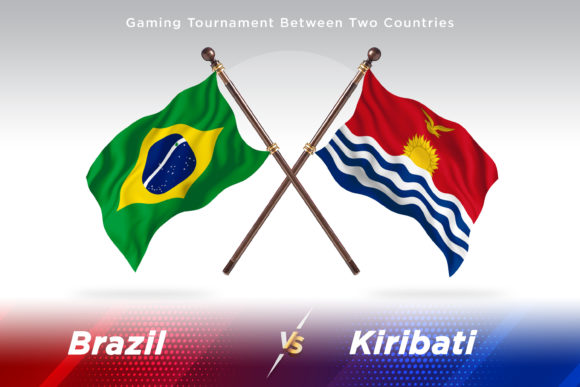
The flag of Brazil is one of the most instantly recognizable in the world. Its green field with a yellow diamond enclosing a blue globe studded with white stars—and crossed by a white equatorial band bearing the national motto "Ordem e Progresso"—is a masterpiece of layered meaning. Adopted on November 19, 1889, just days after the country became a republic, the flag was designed to reflect both Brazil's natural wealth and its philosophical aspirations.
The Meaning Behind the Colors and Shapes
- Green represents the vast forests and rich lands of Brazil, particularly the Amazon rainforest and the country's agricultural heritage.
- Yellow symbolizes the nation's mineral wealth, especially gold, which played a central role in colonial and imperial history.
- Blue globe evokes the sky over Rio de Janeiro on the morning of November 15, 1889—the day the republic was proclaimed. The stars on the globe depict the constellations visible at that exact moment, and each of the 27 stars represents a Brazilian state and the Federal District.
- White band carries the positivist motto "Ordem e Progresso" (Order and Progress), inspired by the French philosopher Auguste Comte, whose ideas heavily influenced the young republic's founders.
A Living Star Map
One of the most fascinating aspects of the Brazilian flag is that it functions as a celestial map. The stars are not arranged arbitrarily; they accurately represent the southern hemisphere sky as seen from Rio de Janeiro at 8:30 a.m. on the day of the republic's establishment. This includes constellations like Southern Cross (Crux), Scorpius, and Canis Major. The flag thus connects national identity directly to astronomy, making it a unique fusion of science, history, and patriotism.
Exploring the Kiribati Flag: Waves, Sun, and a Frigatebird
Now turn your gaze to the flag of Kiribati, a Pacific island nation of 33 atolls and reef islands scattered across a vast expanse of ocean. Adopted on July 12, 1979, upon independence from the United Kingdom, the Kiribati flag is a vivid depiction of the nation's geography, environment, and spirit. It features a red upper half with a golden frigatebird soaring over a rising sun, and a blue and white wavy lower half representing the Pacific Ocean.
Decoding the Symbols of Kiribati
- Red field evokes the blood of the nation's ancestors and the courage of its people throughout history.
- Golden frigatebird is a symbol of strength, freedom, and mastery over the air. The frigatebird is native to the region and is known for its impressive wingspan and soaring flight, reflecting Kiribati's aspirations and connection to nature.
- Rising sun represents a new dawn of independence and hope for the future. It also echoes the fact that Kiribati is one of the first countries to see the sunrise each day, due to its position near the International Date Line.
- Blue and white wavy stripes at the bottom depict the ocean—the lifeblood of Kiribati. The three white stripes represent the three island groups that make up the nation: the Gilbert Islands, Phoenix Islands, and Line Islands.
Why the Kiribati Flag Feels So Different
Unlike most national flags, which rely on abstract geometry or blocks of color, the Kiribati flag is representational. It literally shows waves, a bird, and a sun. This makes it immediately accessible and visually striking. It belongs to a small family of flags that depict landscapes or natural phenomena, such as the flag of the Bahamas or the flag of the Maldives, but Kiribati's use of a frigatebird as a central motif is especially distinctive.
Side-by-Side Comparison: Brazil Versus Kiribati
While these two flags look nothing alike, comparing them reveals fascinating contrasts and unexpected parallels.
Design Philosophy: Abstract vs. Representational
The Brazilian flag is highly abstract and symbolic. Every element—the colors, the shapes, the stars—carries a coded meaning that requires some knowledge to decode. The Kiribati flag, by contrast, is pictorial and immediate. You don't need a history lesson to understand that the wavy lines represent water or that the bird is flying above the sun. This difference reflects broader cultural and historical contexts: Brazil's flag emerged from a philosophical, positivist movement that valued order and progress as abstract ideals, while Kiribati's flag was designed to celebrate the physical realities of island life—ocean, sun, and wildlife.
Color Palette: Intense Contrasts
Brazil's palette—green, yellow, blue, and white—is vibrant and tropical, suggesting lush landscapes and bright skies. Kiribati's palette—red, gold, blue, and white—is equally vivid but leans toward warmer, more dramatic tones, evoking the Pacific sunset and the deep blue of the ocean. Both flags use color to express national identity, but Brazil's colors are tied to natural resources (forests, gold, sky), while Kiribati's are tied to physical geography (ocean, sun, blood).
Shared Theme: The Sky and Water
Here is the most interesting parallel: both flags incorporate celestial and aquatic themes. Brazil's flag features a starry sky and a globe that represents the heavens; though water is not directly depicted, the blue globe can be seen as both sky and ocean, reflecting Brazil's long Atlantic coastline. Kiribati's flag explicitly shows both the sun (sky) and the waves (ocean). For both nations, the horizon between sea and sky is a defining feature of the national landscape. Brazil is a country of vast coastlines and rainforests; Kiribati is a nation of atolls where the ocean is never out of sight. In that sense, both flags honor the elements that shape their people's lives.
Practical Relevance: Flags in Modern Life
Flags are far more than decorative objects. They appear in international diplomacy, sports competitions, branding, and education. Understanding the flags of Brazil and Kiribati helps us appreciate the diversity of human expression and the stories nations choose to tell about themselves.
Flags in Global Business and Tourism
For a company doing business in Brazil, the flag's symbolism of order and progress reflects the country's ambitions in the global market. Brazil's flag is often used as a shorthand for the nation's energy, natural resources, and cultural dynamism. For Kiribati, the flag is a powerful symbol of resilience and identity, especially as the nation faces the existential threat of rising sea levels. The frigatebird soaring above the waves can be seen as a symbol of survival against the odds—a message that resonates far beyond the Pacific.
Flags in Education and Cultural Learning
Teachers and students often use flags as entry points for studying geography, history, and civics. Comparing the flags of Brazil and Kiribati can spark discussions about:
- How different cultures represent nature and national identity.
- The role of astronomy and geography in flag design.
- The historical context of independence movements (Brazil from Portugal in 1822, Kiribati from the UK in 1979).
- The influence of philosophical and political ideas on national symbols.
Common Misunderstandings About These Flags
Let's clear up a few points that often cause confusion.
Misunderstanding 1: The Brazilian Flag's Stars Are Random
Many people assume the stars on the Brazilian flag are decorative. In reality, they are a precise astronomical representation. Each star's size and position correspond to actual stars, and the arrangement reflects the sky over Rio de Janeiro on a specific date and time. This is one of the most scientifically accurate flags in the world.
Misunderstanding 2: Kiribati's Flag Shows a Real Bird Species
Yes, the bird on the Kiribati flag is based on the great frigatebird (Fregata minor), which is native to the region. However, the design is stylized, not a realistic illustration. The bird's silhouette is meant to evoke flight, freedom, and the connection between the islands and the sky.
Misunderstanding 3: Both Flags Are Old
Brazil's flag dates back to 1889, making it over 130 years old. Kiribati's flag, adopted in 1979, is comparatively young. This contrast highlights how newer nations often design flags that are more representational and direct, while older flags may carry layers of historical and philosophical symbolism.
Broader Takeaways: What These Flags Teach Us
By looking closely at Brazil versus Kiribati, we learn that a flag is never just a piece of fabric. It is a compressed story—a visual summary of a nation's geography, history, values, and aspirations. Brazil's flag tells a story of a vast, resource-rich continent-country that looks to the heavens for meaning and to philosophy for direction. Kiribati's flag tells a story of a small island nation that lives with the ocean at its doorstep, looking to the sun for hope and to the bird for inspiration.
In a world where flags are often taken for granted, taking the time to decode and compare them deepens our appreciation for the diversity of human experience. Whether you encounter the green and gold of Brazil during the Olympics or the red and blue of Kiribati at a United Nations summit, you'll now see more than just colors—you'll see the stories of two nations, their skies, and their seas.
Further Exploration
If you'd like to dive deeper into flag symbolism and design, consider exploring the flags of other island nations or studying the role of constellations in national flags. You can also compare the flags of Brazil and Kiribati with those of other countries that use celestial motifs, such as Australia (Southern Cross) or Japan (rising sun). Understanding these connections helps build a richer mental map of our shared world.
Key Takeaways for Quick Reference
- Brazil's flag is abstract, astronomical, and philosophical, with green, yellow, blue, and white representing forests, gold, the sky, and the motto "Order and Progress."
- Kiribati's flag is pictorial, naturalistic, and ocean-focused, with red, gold, blue, and white representing blood, the sun, the sea, and the frigatebird.
- Both flags incorporate sky and water motifs, reflecting the importance of these elements to each nation's identity.
- Comparing flags is a powerful way to understand history, culture, and geography in a single visual frame.
Whether you are a lifelong learner, a teacher, or someone who simply enjoys the beauty of national symbols, the flags of Brazil and Kiribati offer a rich and rewarding study in contrasts and connections. They remind us that every nation, no matter how large or small, tells its story through color, shape, and symbol—and that those stories are always worth reading.